

Lent 2026 Begins With an Invitation to Stop Hiding and Stand Before God
Now, now — it is the Lord who speaks — come back to me with all your heart.
Not tomorrow. Not when we have sorted ourselves out. Not after we have become the kind of person who is ready. Now.
This is how the Church opens the season of Lent — with the voice of God through the prophet Joel, and it is not a gentle suggestion. It is an urgent, almost breathless call. The Irish Sunday Missal translates it with a raw simplicity that stops us in our tracks: Now, now. As if God has been waiting, and cannot wait anymore. As if there is something so pressing about this moment that postponing it even one more day would be a kind of loss — not ours alone, but God’s.
And Paul echoes it in the second reading: Now is the favourable time; this is the day of salvation (2 Cor 6:2). Not a day of salvation. The day. This one. Here.
We hear this every year. And every year, there is a temptation to let the familiarity of these words carry us past them — to nod, receive our ashes, and step into the usual Lenten programme: give something up, pray a little more, try harder. But what if, this year, we paused long enough to hear what is actually being asked of us?



What If Lent Is Not About Trying Harder?
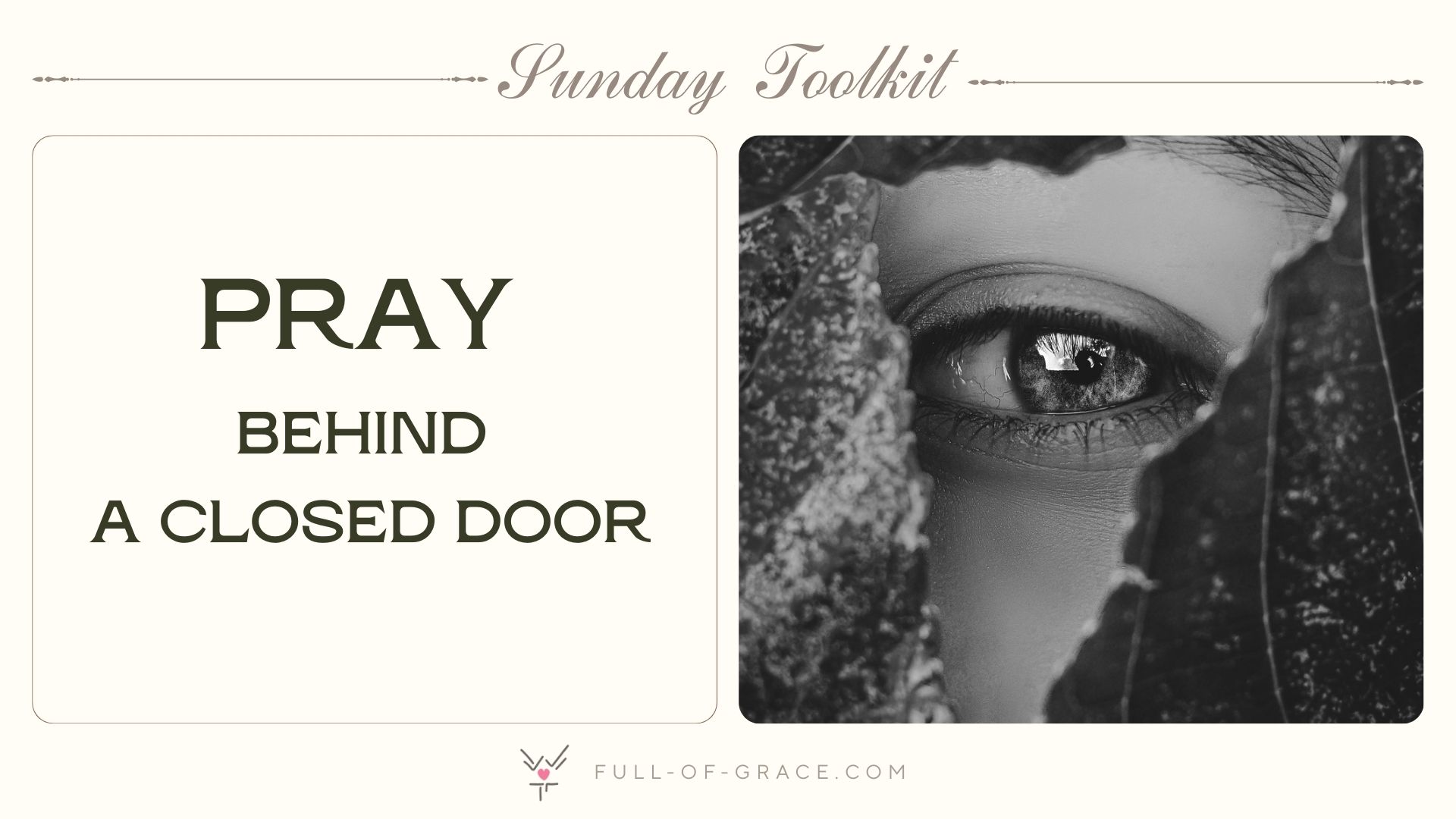
The Ash Wednesday gospel gives us three pillars for Lent — prayer, fasting, almsgiving — and immediately tells us to hide them. Give alms in secret. Pray behind a closed door. Fast without anyone knowing. Your Father, who sees what is done in secret, will reward you.
We often hear this as an instruction about humility: do not show off. And it is that. But there is something deeper here — an invitation into a place of extraordinary intimacy. A secret place where it is just us and God. No audience. No performance. No spiritual résumé. Just two faces, meeting.
And then Jesus says something remarkable about fasting: When you fast, put oil on your head and wash your face (Mt 6:17).
Wash your face.
The hypocrites, Jesus says, pull long faces — they disfigure their appearance, they put on a fasting mask. But the one who fasts truthfully does the opposite: uncovers their real face. Washes away whatever is not truly them. Comes before God with nothing on.
This is the Lenten invitation we want to follow this year. Not a programme of self-improvement, but a slow, courageous uncovering. A washing of the face. A coming out of hiding.
Nothing Between Your Face and My Face
There is an ancient insight hidden in the very first commandment that can reshape the way we understand this entire season.
Most of us know the first commandment as: You shall have no other gods before me. But the Hebrew phrase — al panai (על פני) — does not say “before me.” It says, more literally, “upon my face.” You shall have no other gods upon my face. You shall not place anything over the face of God. You shall not cover the encounter.
Read this way, the commandment is not primarily a prohibition. It is an invitation to intimacy of the most radical kind: there shall be nothing between your face and my face.
No idol, no image, no performance, no pretence. No mask of piety, no mask of shame. No script about who we should be. Just the bare, washed, anointed face — and the face of the living God.
This is the lens we want to carry through Lent this year. Each Sunday of this season will peel back another layer of what we have placed al panai — upon the face of God and upon our own. From the first hiding in Eden, through the shining face of the Transfiguration, to the woman at the well who came at noon to avoid being seen, to the mud washed from the eyes of the man born blind, to the burial cloths removed from the face of Lazarus — the readings of Year A trace a remarkable arc: a progressive unhiding, from the bushes of the Garden to the open tomb.
We will walk this arc together, Sunday by Sunday. But for now, on this Ash Wednesday, the invitation is simple:
What have we placed upon the face of God?
What are we using to avoid the encounter?


From Examination of Conscience to Examination of Consciousness
There is one more shift we want to make this Lent, and it touches the penitential rite — that moment at the beginning of Mass where we are invited to acknowledge our need for God’s mercy.
Too often, the examination of conscience becomes a kind of moral inventory: What did I do wrong this week? It has its place. But the Franciscan teacher Father Richard Rohr proposes something that goes deeper — what he calls an examination of consciousness rather than an examination of conscience. Where conscience asks What did I do?, consciousness asks What am I aware of? Where have I fallen asleep? What am I refusing to see?
Rohr describes consciousness as not the one who sees, but that which sees us seeing. Not the one who knows, but that which knows we are knowing. It is the quiet witness beneath all our noise and all our performance — the place where the Spirit already dwells.
This is not about abandoning moral reflection. It is about going to the root. Because the deepest question is not What did I do wrong? but Where am I hiding? Not What sins did I commit? but What have I placed upon the face of God to avoid standing here, uncovered, in the presence of the One who already sees everything — and loves what He sees?
This Lent, whether in the liturgy or in our own quiet spaces, we want to practise this different kind of noticing. Not a checklist, but an awakening. Not guilt, but awareness. The kind that washes the face and lets us be seen.
The Road Ahead: Sundays of Lent, Year A
In the weeks to come, we will walk through the great Sunday readings of Lent Year A — some of the richest, most multi-layered gospels in the entire lectionary — following this thread of hiding and unhiding, of face meeting face.
We will look at the less obvious places in the readings. We will dig beneath the familiar surfaces. We will ask, each week: Where are we hiding — and what would it look like to come out?
These reflections will be part of the Sunday Toolkit here on Full-of-Grace — with an overview of each Sunday’s themes, in-depth biblical background, prayers of the faithful, and a reimagined approach to the penitential rite as an examination of consciousness rather than a checklist of wrongs.



An Invitation: Dust to Grace
If this way of approaching Lent speaks to something in you, I also want to invite you into a new series that has just begun here on Full-of-Grace: Dust to Grace.
The first journey takes us to the shores of the Gerasenes, where a man called Asher has chained himself among the tombs — hiding from his community, hiding from himself, hiding among the dead. And Jesus crosses a stormy sea to find him. To call him out. To unbind him.
It is another story of unhiding. Another face uncovered. And it is told not just through words, but through the body — because some truths can only be touched, not taught.
Seven Nights With Asher: From Tombs to Freedom is available here.
Now, now — it is the Lord who speaks.
We are dust. And we are returning — not to dust, but to grace. To the face we have been hiding from. To the face that has never stopped looking for ours.
This Lent, let us wash our faces. Let us be seen.
Let us begin.

Subscribe and find your way to be seen
Sacred & Scattered
Delivered with love. Occasionally with sass.