
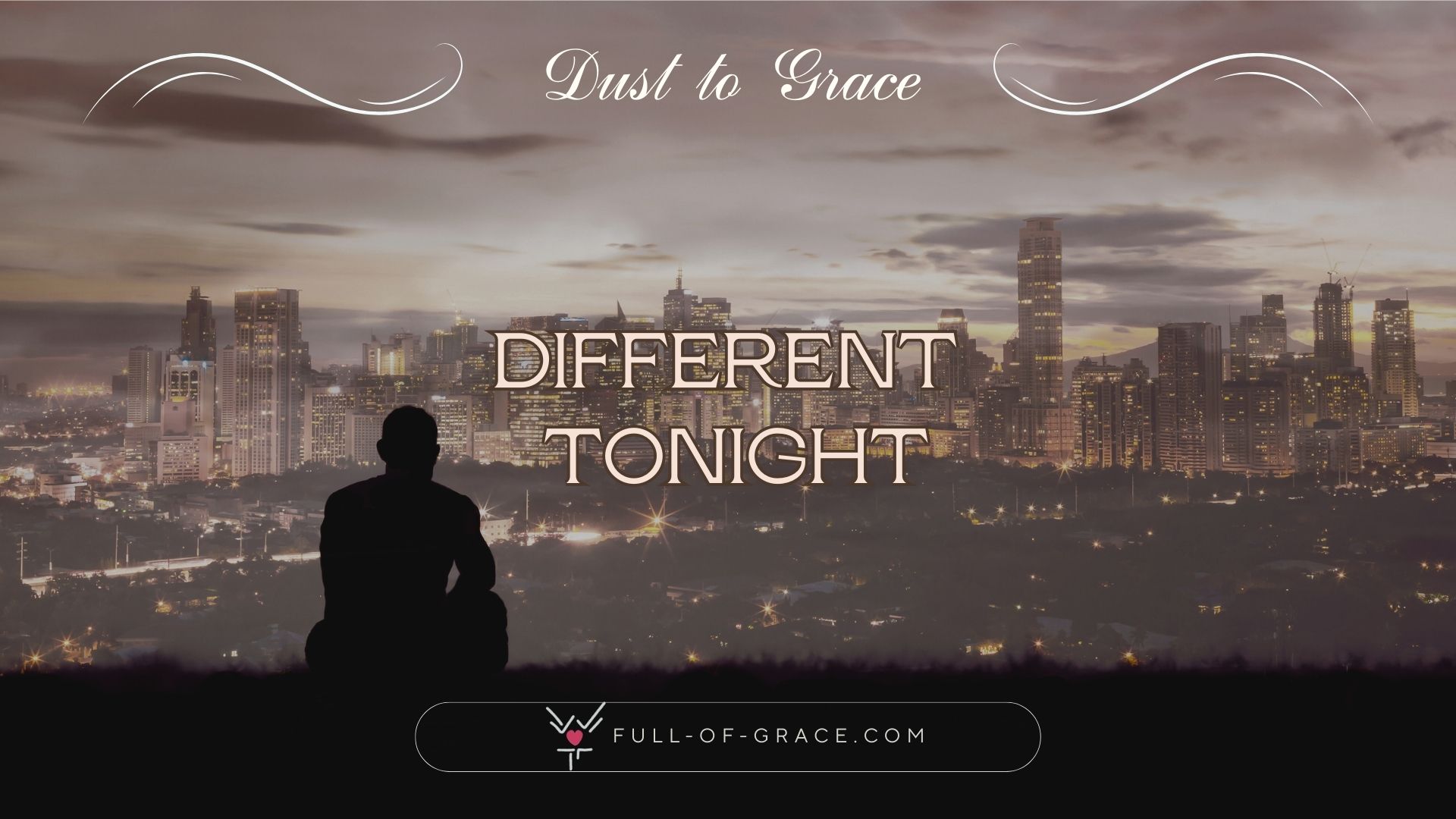

The setting sun bleeds into the sea, painting waves in copper and crimson. Asher’s fingernails dig into his palms as he watches white tombs emerge from gathering darkness – pure, untouchable, mocking his uncleanness. His chest constricts with each ragged breath.
“This night is going to be better,” he whispers, the words bitter ash on his tongue. The iron chain scrapes against bare skin as he wraps it around his torso, each loop a familiar ritual of shame. “Different tonight,” he promises the indifferent stones, even as his body betrays him with its trembling.
Fresh wounds bloom where the chains bite. Blood – his constant companion – marks another tomb stone. Dark droplets stain white limestone, and Asher recoils from his own defilement of this sacred space.
Across the lake, Capernaum fades into evening haze, but the distant echo of Shema prayer still reverberates in his bones. His lips move soundlessly, muscle memory of words he’s no longer worthy to speak.
He stumbles between the tombs, a drunkard’s dance of desperation. The chain rattles against stone as he careens from one marker to another, leaving crimson trails on their pristine faces. Each impact sends shockwaves through his battered body, but pain is preferable to the madness lurking beneath his skin.
“Different tonight,” he repeats, curling into himself as darkness claims the land. His spine presses against cold stone – the only embrace he allows himself. The chain tightens with each shallow breath, metal links catching on old scars.
On the other side of the lake, normal life continues. But here, among the dead, Asher rocks back and forth, back and forth, like a child soothing itself to sleep. Here, where white tombs stand sentinel over his corruption, he belongs. Here, where his blood marks his territory among the dead, he waits for another night to claim him.

He lived among the tombs; and no one could restrain him any more, even with a chain. (Mark 5:3, NRSVCE)
Mark is precise about this. The man had been restrained — the Greek verb is passive. Others chained him. The community saw what was broken and did what communities do: they tried to contain it. Shackles, fetters, iron links. And he wrenched them all apart.
I chose to tell it differently. In Asher’s story, he wraps the chains around himself. He performs his own ritual of restraint, his own liturgy of shame — because that’s closer to where most of us live now. We are no longer bound by our villages. We bind ourselves. The inner voice that says control this, contain this, be better, try harder — that voice has replaced the community that once stood guard. We have become our own jailers, and we are terrifyingly good at the job.
But Mark gives us something else, too. A detail easy to miss. Asher lives on the eastern shore — pagan territory, the land of the Gerasenes — and across the water lies Capernaum, the Jewish heartland, the place where the Shema is recited at dusk and dawn. In the core story, I imagine Asher hearing it carry across the lake. His lips move. The words don’t come. But his body remembers.
That’s the thread I want us to follow this week. Not the tombs — not yet. We’ll get to the dead places. But first: the other shore. The life still pulsing beneath the chains. The thing you long for that you may not have named, the ache that surfaces when you hear the bells ring or catch a glimpse of something you once belonged to and walked away from — or that walked away from you.
Scripture tells us that night and day, among the tombs, this man was crying out. Commentators read torment. I read longing. A cry is not the same as silence. A cry still expects to be heard.
This week, we begin there — not with what’s dead, but with what refuses to die.
The worksheet for this week is a seven-day practice. Each day asks one thing and takes no more than fifteen minutes. It is not a study. It is a slow act of listening. By the end of the week, your body will have begun to speak — even if it starts with a whisper.
More about Asher’s Biblical roots.
More about Dust to Grace series.






7 thoughts on “Asher Week 1: Among the Tombs”