
“No, no, no—” The word pulses through Asher’s body like fever, each repetition forcing his spine to arch against cold stone. Rain needles his exposed skin, but he’s burning from within. His bound fists clench and unclench in desperate rhythm, like a heart trying to burst from ribcage prison.
The scream builds low in his gut, coiling like a serpent. His throat works against it, muscles straining visible beneath filthy skin. Lightning flashes and in that instant his shadow fragments across white tombs – a monster with too many limbs, too many faces. The taste of copper floods his tongue as teeth break skin.
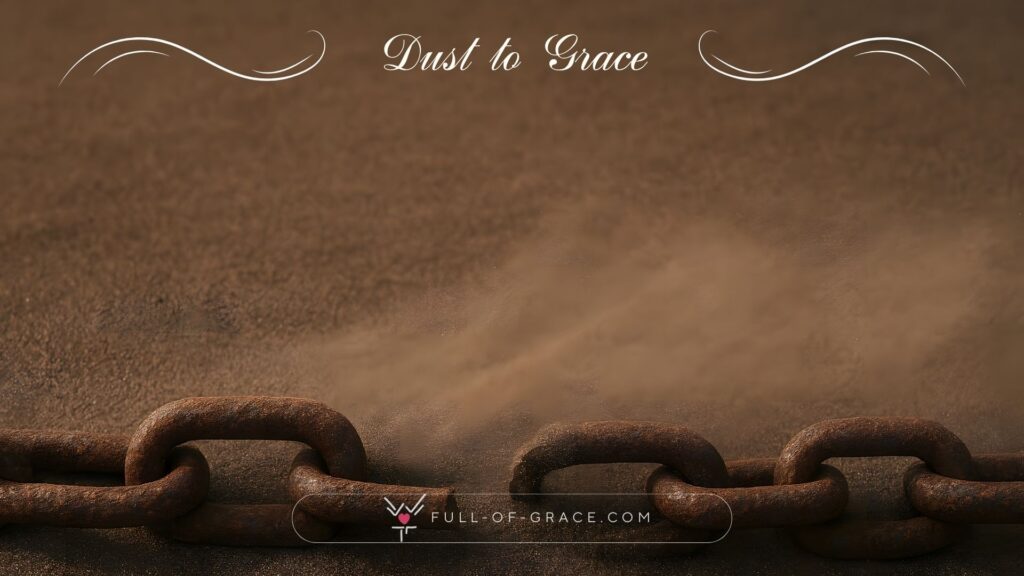
“Nooooooo—” It tears free at last, that thing inside him. His chest heaves but can’t catch air. Each breath slides through him like smoke, leaving him emptier, hollower, hungrier for pain. The chain links bite deeper, and he welcomes their cold kiss. At least this pain has shape. At least this agony leaves marks he can see.
Rain tracks down his face – nature’s mockery of tears he can’t shed. His fingers dance spider-like across the chains, seeking weakness, seeking release. “Just one night,” he pleads, voice raw as fresh wounds. “One damned night.” But even as the words leave his lips, his body betrays him. Muscles spasm. Tendons crack like whips beneath skin.
“Can you hear me?” The question echoes in skull-caverns, bouncing back distorted: hear me hear me hear me until words lose meaning and become pure sound, pure pain. His spine bows impossible angles. Joints pop and grind as something else takes control.
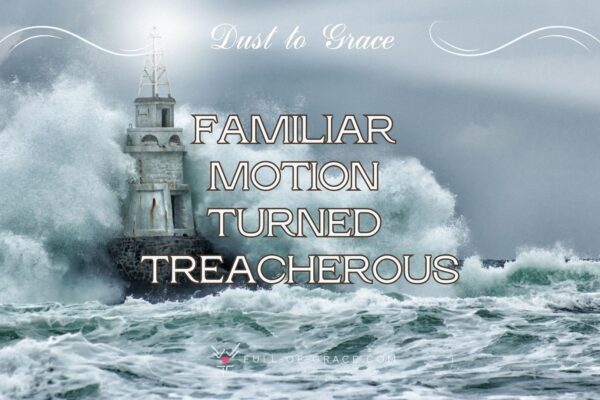
Thunder answers his challenge. The storm speaks his shame. And Asher – or what’s left of him – draws tight as a bow string, every fiber trembling on the edge of surrender. One heartbeat of perfect tension. Then—
His body becomes pure motion, pure violence. Chains shriek against stone. Blood blooms in the darkness. And Asher’s scream joins the storm’s voice as fetters shatter, setting loose all his demons into the savage night.

Whenever he was put into chains and shackles—as he often was—he snapped the chains from his wrists and smashed the shackles. No one was strong enough to subdue him. (MARK 5:4 NLT)
There is a particular kind of violence that looks, from the outside, like strength.
Asher breaks every chain they put on him. Iron fetters, hand and foot — he tears them apart. The townspeople are afraid to go near that stretch of hills anymore. Whatever is living among the tombs is stronger than anything they can bring against it.
But watch him more closely.
He is not free. He is not winning. He is caught in something that has become, over years of repetition, the whole of what he knows himself to be. The fight is his identity. The chains are his liturgy. Even the breaking of them — especially the breaking of them — is part of the ritual he cannot escape. He will wrap himself again tomorrow night. He knows this. His body knows this. And still his scream joins the storm, because what else is there? This is who Asher is. This is all he has left.
This is the problem with the thing you cannot stop.
It doesn’t matter what that thing is. It doesn’t have to be dramatic. It doesn’t have to frighten your neighbours or draw blood. It can be something so small that if you named it to a friend, they would raise an eyebrow and say — that’s it? That’s what you’re worried about? And you would not be able to explain why it matters so much. Why the pull is so strong. Why you always go back.
Because somewhere along the way — so gradually you didn’t notice — you became so merged with it that you can no longer tell where you end and the pattern begins. A relationship, a behaviour, a way of surviving. You are not choosing it anymore. You have become it. And the reaching for it, the relief of it, the shame after it — all of that is now part of how you know yourself. This is what I do when the night gets loud enough. This is who I am.
To target that thing feels like losing yourself. Because in a very real sense, it does.
Asher’s chains do not feel like prison to him. They feel like the only honest thing in a world that has no place for what he carries. At least this pain has shape. At least this agony leaves marks he can see.
This week’s work does not ask you to break anything.
It asks you to sit down.
In the middle of the violence — the internal kind, the kind that runs on a loop beneath the ordinary surface of your days — it asks you to find your bow, take your posture, place your feet on the ground. To build, quietly and without drama, the one thing Asher doesn’t have: a place to stand that isn’t the fight.
Because the posture work this week is not incidental. It is not a warm-up. It is the counter-movement to everything Asher represents. He is pure motion, carried by forces he can no longer distinguish from himself. You are learning — one minute at a time, one breath at a time — what it means to stay still while the storm moves through you.
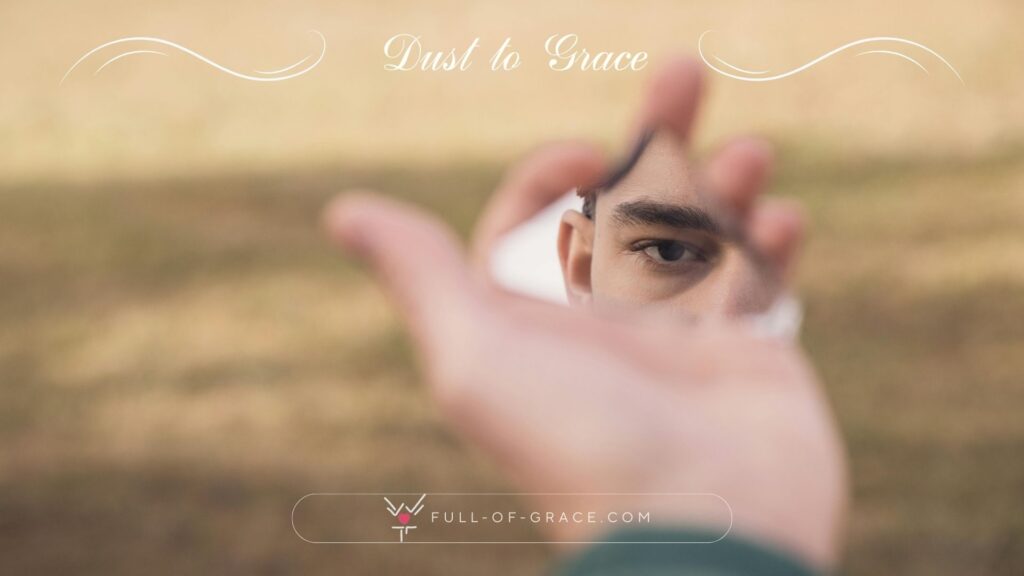
The worksheet this week works with the truest thing you found last week. Not the comfortable thing. Not the flattering thing. The true one — which may be complicated, which may sting a little when you say it about yourself out loud. You will find where it lives in your life. You will look at what it’s holding up. You will write seven sentences you may not want to read, and then you will sleep on them, and then you will come back the next day with your feet on the ground and ask: is that actually true?
This is slow work. It is not the kind of work that makes a sound when it happens.
But Jesus is already on the water. He left before you started reading this. He is crossing whatever storm separates you from the shore where you are standing, and he is not arriving with a solution or a system or a strategy. He is arriving with a question: what is your name?
Not your wound. Not your pattern. Not the thing you cannot stop.
Your name.
That question is coming. This week, we build the ground to receive it.
Download the Week 3 worksheet below. If you haven’t yet completed Week 1 and Week 2, begin there — this week’s work builds directly on what you found.
More about Asher’s Biblical roots.
More about Dust to Grace series.