QUICK REFERENCE
Date: February 22, 2026 Liturgical Season: First Sunday of Lent, Year A Readings: USCCB Daily Readings — February 22, 2026 Readings citations: Genesis 2:7-9; 3:1-7 | Psalm 51:3-4, 5-6, 12-13, 17 | Romans 5:12-19 | Matthew 4:1-11
One-Sentence Theme: The first sin was not the eating — it was the hiding. Lent begins with the invitation to step back into the open.
WHERE ARE WE?
In the Liturgical Year
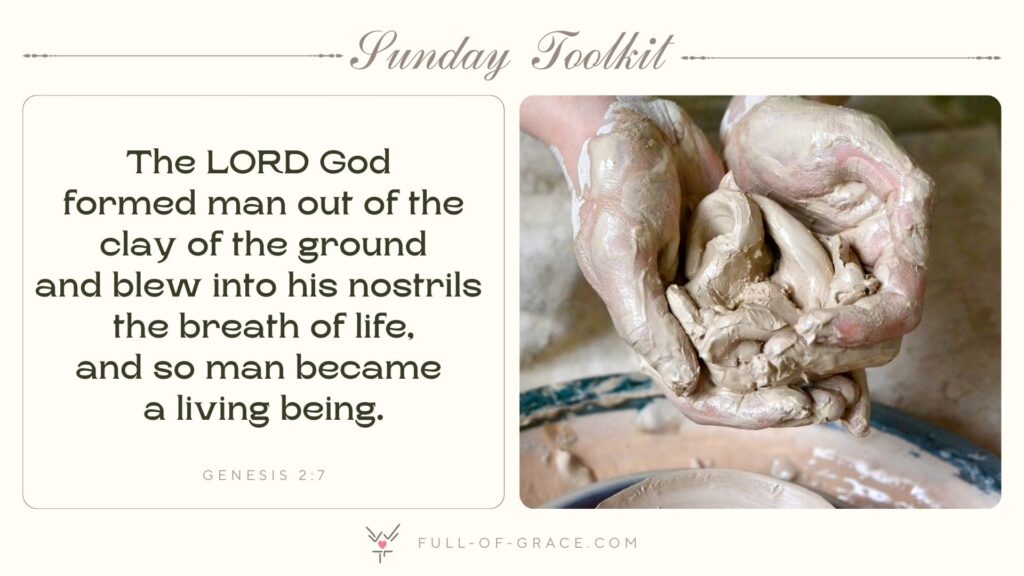
Ash Wednesday is behind us. The ashes said: you are dust. But Genesis says: you are dust that God breathed into. The dust is not the whole story. We begin Lent not with shame but with the memory of breath.
This is the first of six Lenten Sundays, and the Church places us between two gardens: Eden, where humanity learned to hide, and the wilderness, where Jesus refused to. Every year, the First Sunday of Lent gives us the temptation in the desert. This year, in Cycle A, it is paired with the Genesis account of the Fall — and the pairing is not accidental. The Church wants us to see both Adams side by side.
Next Sunday (Second Lent) brings the Transfiguration — Jesus revealed in glory on the mountain. Hold that in your peripheral vision: this Sunday, Jesus stands in the desert, unmasked, refusing every disguise. Next Sunday, we see what’s underneath when the masks come off — not nakedness, but light. The arc from the First to the Second Sunday of Lent is the arc from dust to radiance.
In the Biblical Narrative
We are at the beginning — both of the human story and of Jesus’ public ministry. Genesis gives us the first Adam, shaped from dust, breathing God’s breath, losing the face-to-face. The Gospel gives us the last Adam, driven into the dust of the desert, breathing the same breath, refusing to lose it.
In Salvation History
The great arc: creation — fall — exile — promise — incarnation — testing — cross — resurrection. Today we stand at two hinge points simultaneously: the moment everything fractured (Genesis 3) and the moment the repair begins (Matthew 4). Paul’s letter to the Romans is the commentary: what was lost through one man’s hiding is restored through one man’s standing in the open. And the gift, Paul insists, outweighs the fall. The mathematics of grace don’t balance. They overflow.
THE SPIRIT OF THIS SUNDAY
Hiding and Being Hidden
The entrance antiphon sets the tone before a single reading is proclaimed: “When he calls on me, I will answer him.”
All through Genesis, God calls and we hide. All through the psalms, we beg God not to hide from us. And in the desert, the new Adam finally answers — not with miracles, not with spectacle, not with power, but with presence.
The collect deepens the thread: “Grant, almighty God, through the yearly observances of Holy Lent, that we may grow in understanding of the riches hidden in Christ.”
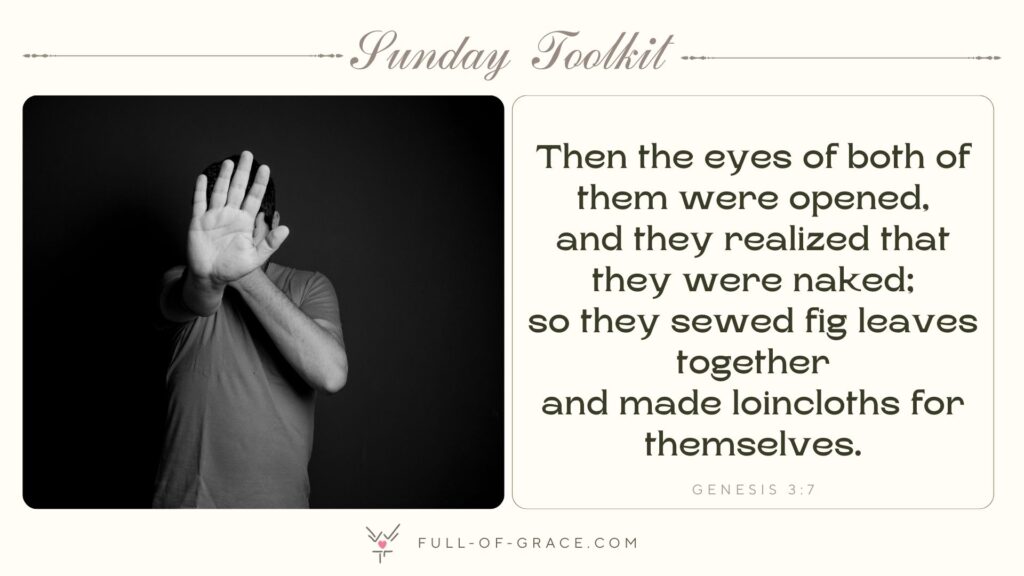
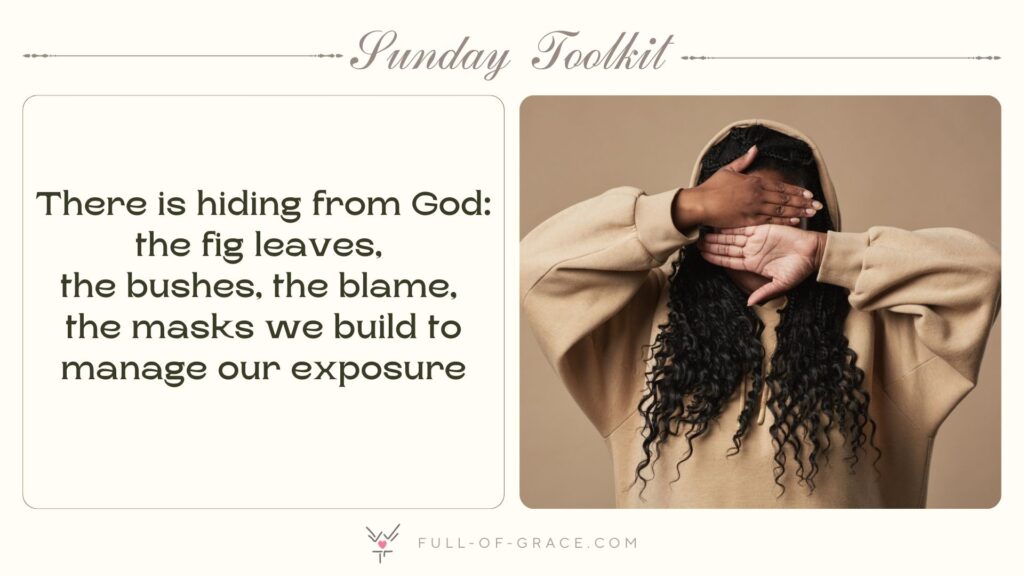
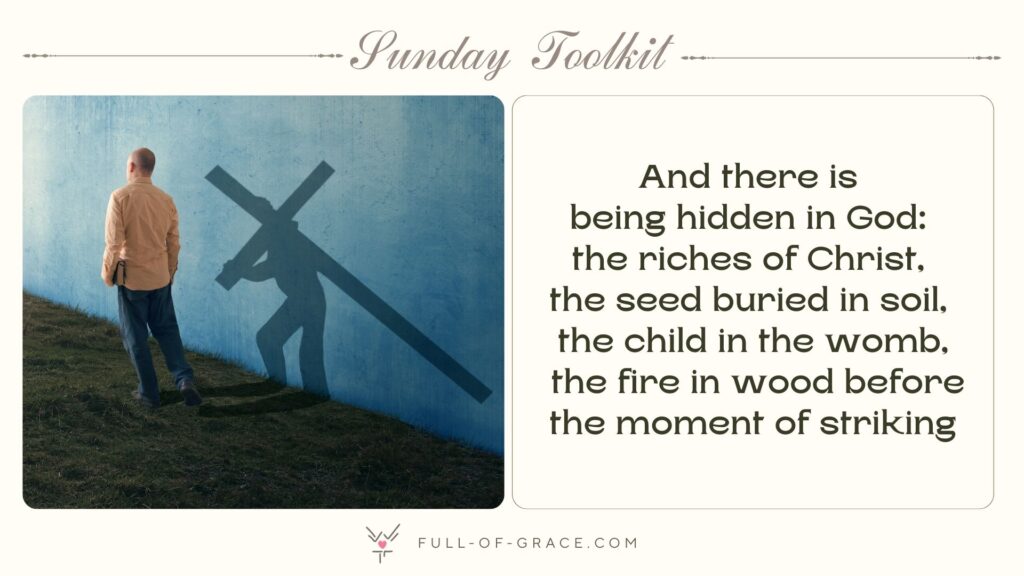
There are two kinds of hidden in this Sunday’s liturgy — and they move in opposite directions. There is hiding from God: the fig leaves, the bushes, the blame, the masks we build to manage our exposure. And there is being hidden in God: the riches of Christ, the seed buried in soil, the child in the womb, the fire in wood before the moment of striking. Lent invites us to exchange one kind of hiding for the other.
Symbols and Themes for Worship
Dust and breath — The first reading begins with God shaping clay and breathing into it. Ash Wednesday’s dust is still fresh on our foreheads. But today adds the breath. Consider how the liturgy can hold both: the weight of dust and the lightness of breath. The vulnerability of clay and the intimacy of mouth-to-mouth.
The desert as exposure — The Gospel places Jesus in the wilderness: no walls, no roof, no cover. The desert is the place where there is nothing to hide behind. For communities that use visual environments, simplicity is the message. Strip rather than add. Empty rather than fill. Let the space itself become the desert.
Fig leaves and garments — The first reading ends with the sewing of fig leaves. The Advent series explored how God replaced those inadequate coverings with garments of skin — and what that cost. This Sunday, we are at the fig-leaf stage. We haven’t arrived at God’s better clothing yet. Lent is the walk between the two.
The gaze — Before the Fall, Adam’s gaze was on God. After, it collapses inward: “they realized they were naked.” In the desert, Jesus keeps his gaze fixed on the Father through every temptation. The movement from self-consciousness to God-consciousness is the movement of Lent itself. Worship that gently redirects attention — from screen to face, from self to other, from performance to presence — is doing the work of the season.
FREE RESOURCES FOR THIS SUNDAY
The Story Beneath the Story
Biblical Background: First Sunday of Lent (Year A)
What the readings say — and what they don’t. A reading-by-reading exploration of Genesis, Psalm 51, Romans, and the desert temptations, tracing the common thread of hiding through all four texts. Includes a rabbinic key from the Talmud that reframes the Fall in ways most homilies never touch: the idea that relational fracture precedes disobedience, and that we’ve been “ascending as two and descending as four” ever since. Includes an introduction text that can be read aloud before the Liturgy of the Word.
For liturgy teams, homilist preparation, Bible study groups, and anyone who wants to understand why these four readings were placed together.
The First Hiding: An Embodied Penitential Rite
Sunday Experience: First Sunday of Lent (Year A)
A guided meditation designed to replace or accompany the Penitential Rite at the beginning of Mass. Leads the assembly through three zones of awareness — the outer world, the shared space, the inner body — before inviting them to face, gently, the places in their lives they keep hidden. Modern, visceral, and deeply pastoral. Includes a carefully structured return sequence that honours vulnerability without leaving people exposed.
Can also be adapted for post-communion reflection or personal prayer.
For presiders, liturgy coordinators, retreat leaders, and anyone who believes the body belongs in worship.
Called Back to Be Seen: Prayer of the Faithful
Prayer of the Faithful: First Sunday of Lent (Year A)
Intercessions that name the places where real people really hide: in loneliness, in performance, in the shame of having been told their truth was too much. Prays for the elderly who disappear behind closed doors, the young who live their most honest hours in the glow of a screen, the caregivers who have forgotten how to ask for care, and those who died carrying secrets they never found a safe place to speak. Theologically grounded, pastorally honest, immediately usable.
For presiders, readers, and liturgy teams.
Where Did I First Learn to Hide?
Personal Encounter: First Sunday of Lent (Year A)
Coming soon. A personal reflection on this Sunday’s readings — where hiding begins, what it costs, and what it would mean to stop performing our way through Lent. For the spiritually curious, the quietly struggling, and anyone who has ever smiled when they were exhausted and said “I’m fine.”
LOOKING AHEAD
Second Sunday of Lent (Year A) — March 1, 2026: The Transfiguration. Jesus on the mountain, garments white as light. If this Sunday asks “where do you hide?”, next Sunday asks “what is revealed when the masks come off?” The journey from dust to radiance continues.
These resources are free and always will be. If they serve your community, share them. If you’d like to work together on custom liturgical preparation, seasonal planning, or embodied worship for your parish — get in touch.
For the story of how garments of light became garments of skin, see our Advent series: The Story of Hiding: From Light to Skin.