
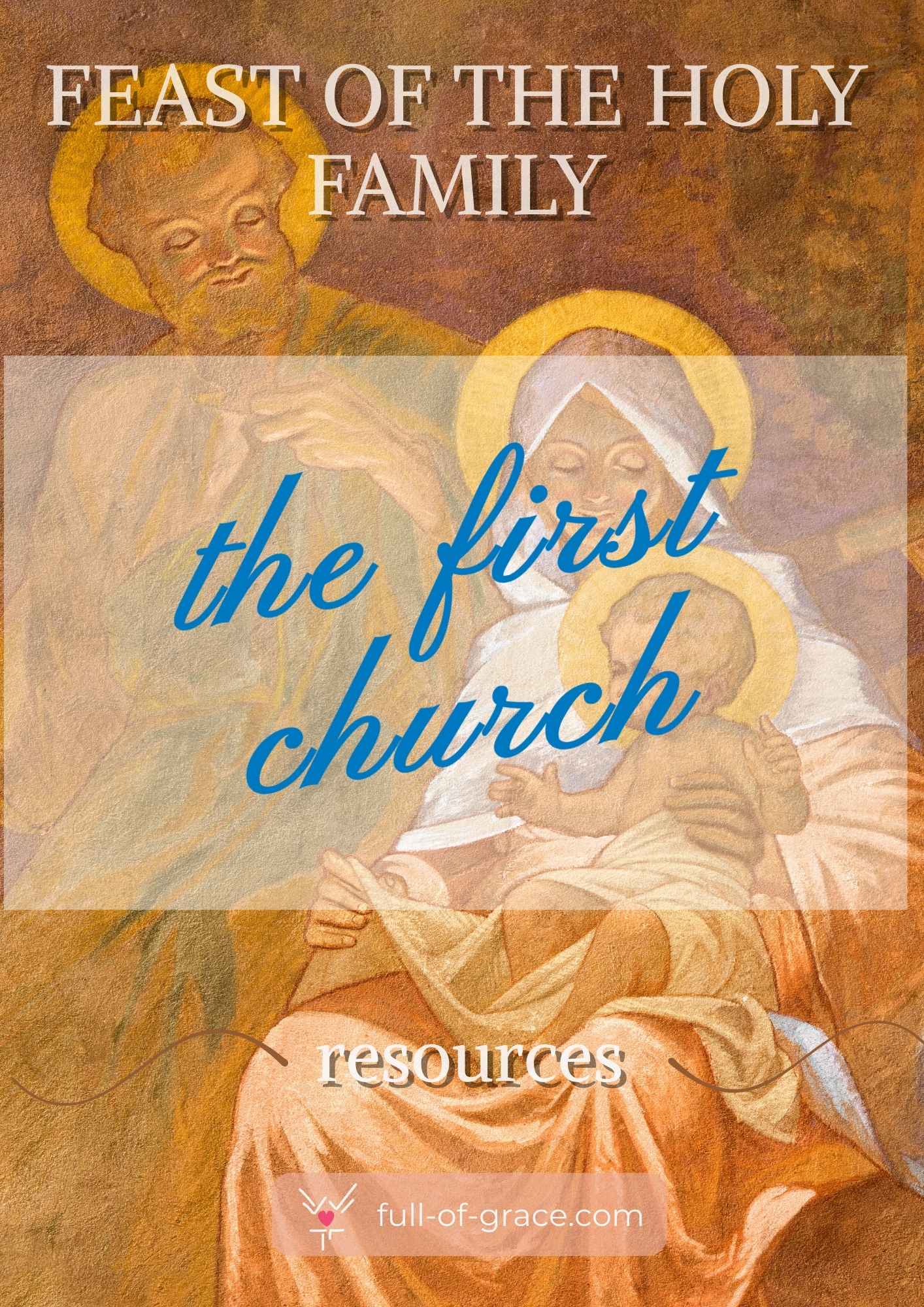
QUICK REFERENCE
Date: December 28, 2025
Liturgical Season: Christmas Octave – Feast of the Holy Family of Jesus, Mary and Joseph
Liturgical Year: Year A
USCCB Readings: https://bible.usccb.org/bible/readings/122825.cfm
One-Sentence Theme: God incarnates into our household systems, honoring the family as the first church where covenant identity is preserved not in stone but in the living relationship between generations.
WHERE ARE WE?
In the Christmas Octave
We are still within the eight days of Christmas – that sacred octave when we extend the celebration of the Nativity, recognizing that this mystery is too vast to contain in a single day. The Church gives us eight full days to contemplate what it means that God became flesh and dwelt among us.
And today, on the first Sunday after Christmas, we pause to consider where God chose to dwell: in a family.
The History of This Feast
The Feast of the Holy Family is surprisingly young in the Church’s liturgical calendar. While devotion to the Holy Family existed for centuries (especially promoted by St. Francis de Sales in the 17th century), it wasn’t until 1893 that Pope Leo XIII established it as a universal feast for the whole Church.
Why? Because the late 19th century saw families under tremendous pressure from industrialization, urbanization, and secularization. The rhythms that had sustained family life for generations – multi-generational households, shared work, embedded faith practices – were dissolving. Pope Leo XIII recognized that families needed the Holy Family as a model not of impossible perfection but of real, embodied covenant life.
Originally celebrated on the Sunday within the Octave of Epiphany, the feast was moved to its current position – the Sunday within the Octave of Christmas – after the Second Vatican Council’s liturgical reforms. This placement is theologically brilliant: it immediately connects the cosmic mystery of the Incarnation (Christmas) with its most intimate reality (family life).
God didn’t become human in the abstract. He became this infant, in this family, with these particular people who had to figure out how to protect him, feed him, teach him, love him.
Why These Readings Now?
The Christmas season can become so sentimentalized that we forget the Incarnation’s scandalous vulnerability. These readings ground us in reality:
- Sirach reminds us that families have always been under cultural pressure, always had to fight to preserve covenant identity
- Psalm 128 blesses the ordinary, hidden life of the household – the “recesses of home” where covenant is lived daily
- Colossians calls us to splanchna compassion – gut-level, embodied mercy – in our actual relationships
- Matthew shows us that the Holy Family faced exile, displacement, and danger from political powers
This Sunday refuses to let us stay in the soft-focus glow of the manger scene. It insists we look at the rough hay, smell the unwashed straw, feel the cold night air, and recognize that God chose to need us – to be utterly dependent on human family bonds – in order to save us.
The family is the first church. Not because families are perfect, but because this is where we first learn what covenant means: staying when it’s hard, protecting the vulnerable, making space for one another’s growth, learning the rhythm of pouring out and being replenished.

LITURGY PLANNING
Symbols and Themes That Emerge
The Manger as Domestic Altar:
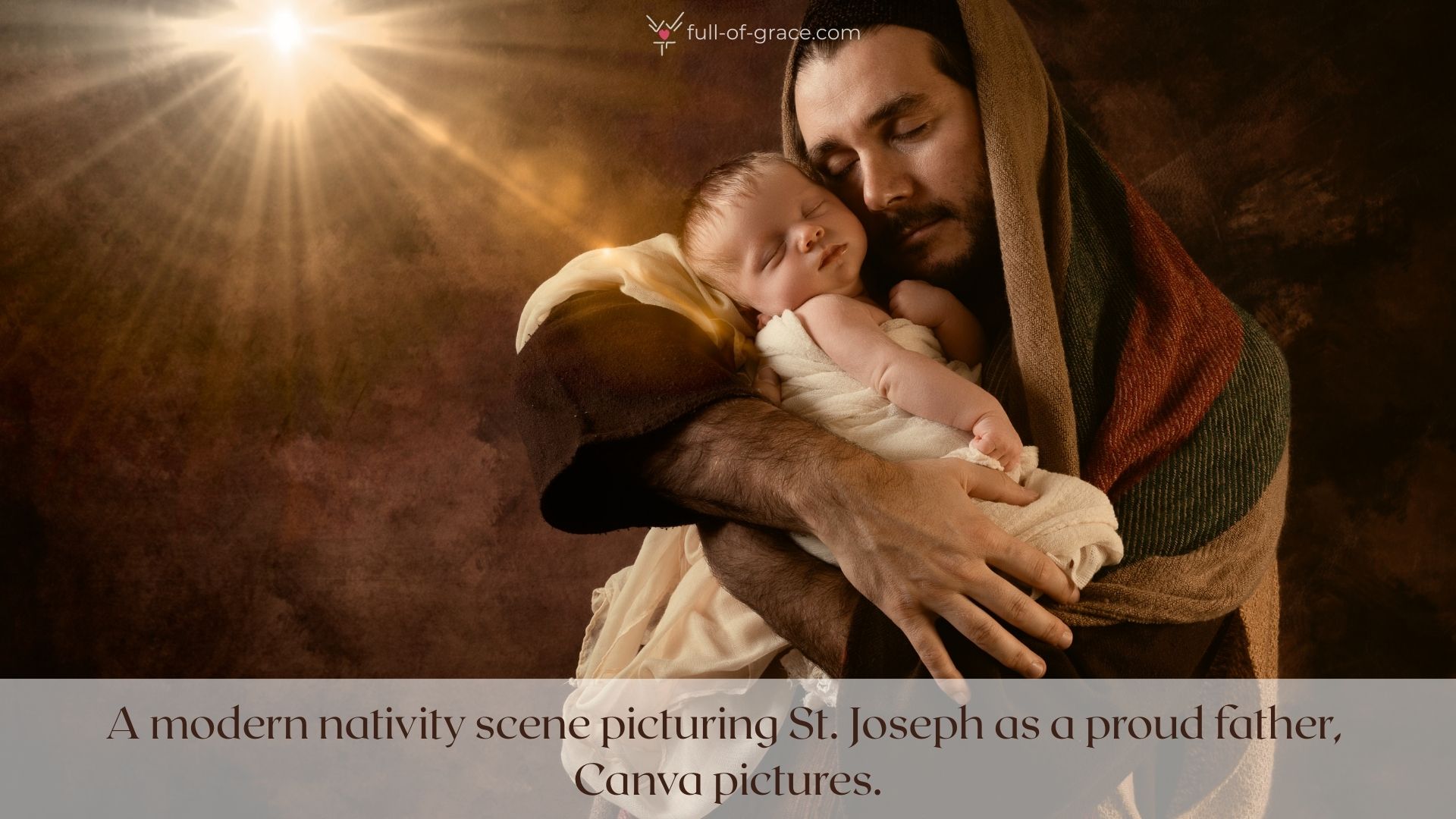
The manger isn’t just where Jesus was born – it’s the symbol of the domestic church. The feeding trough becomes the first altar, the stable becomes the first sanctuary, the family becomes the first congregation. Consider how to honor the domestic church visually today.
Light in Hidden Places:
The psalm speaks of the “recesses of your home” – the hidden, intimate spaces where covenant is lived. The Holy Family shows us that holiness often happens away from centers of power (Nazareth, not Jerusalem), in obscurity (a carpenter’s household), in the ordinary rhythms of daily life.
Protection and Refuge:
Joseph’s flight to Egypt echoes the Exodus in reverse. The family becomes a place of refuge, of protection from systems that would destroy. How can your liturgy honor those seeking refuge today?
Generational Transmission:
The commandments written “father and son” (luchot awanim) – covenant identity passed from one generation to the next, not in stone but in relationship. This is a Sunday to acknowledge grandparents, godparents, and all who pass on faith.
Worship Suggestions
This is the Christmas season. Some people have returned to church after years away, seeking something familiar. They should be received in that need and desire. The Christmas songs should be joyfully sung by the congregation, and the roofs should be lifted in our churches.
A note for congregations that struggle with lack of music or worship ministry: This is the season of the year when one person should be enough to begin and the rest should follow. But we need to sing.
Singing is a primary instinct when holding an infant. We croon. We hum. We rock and sway and make music without even thinking about it. So if we don’t sing in the Christmas season – with the infant still sleeping in the manger, with Mary still humming lullabies, with the angels’ song still echoing – when are we going to sing?
Encourage congregational participation through:
- Familiar Christmas hymns that people know by heart
- Simple refrains that can be sung repeatedly throughout the liturgy
- Gestures during singing – encourage people to sway, to raise hands during glory moments, to hold hands during unity songs (if comfortable)
- Breathing together before singing – one deep breath as a community before launching into song
- The hum – if people don’t know all the words, encourage humming along, being part of the sound even if uncertain
- Silence between verses – brief pauses to let the meaning sink in, to experience the sound fading, to breathe together
Embodying the Family Church Through Liturgical Gestures
This Sunday offers a unique opportunity to physically embody what it means to be the family of families, the domestic church gathered as one body. Consider incorporating these simple but profound moments:
After the Penitential Rite: Before moving to the Gloria, invite a brief pause: “We have asked God’s mercy. Now turn to those you came with – your family, your friends – and take a moment to embrace one another. Reassure each other of your unity despite your shortcomings. We are the family church, learning to love imperfectly but persistently.”
Allow 15-20 seconds of genuine connection. This isn’t performance – it’s the physical reality that we belong to each other.
During the Sign of Peace: Rather than the quick handshake or nod we’ve reduced this gesture to, encourage real embrace: “This is the Feast of the Holy Family. Give your family members real hugs. Take an extra moment. Those who are here alone – open your arms wide to hold the invisible church: the communion of saints, all those you wish were gathered here, your beloved dead, the family of faith across time and space.”
During the Our Father: Before beginning the prayer, invite families to hold hands or embrace: “We pray to Our Father as one family. If you’re here with family or friends, hold hands or put your arms around each other. If you’re here alone, open your arms to hold the whole Church – those here, those absent, those in heaven. We are all held in the Father’s embrace.”
This transforms the Our Father from recitation to embodied prayer – we ARE the family praying to our Father together.
Practical Note for Ministers: Model these gestures yourself. If the presider, deacon, and servers embrace during the penitential rite, if they hold hands or embrace during the Our Father, the congregation will follow. We teach through our bodies, not just our words.
For Those Uncomfortable with Physical Touch: Always make these invitations, not commands. “If you’re comfortable…” Some people carry trauma around touch. Some have sensory sensitivities. Some just need space. Honoring their boundaries IS part of being family. The gesture of opening arms to hold the invisible church works for everyone.
Consider incorporating:
- A moment of stillness during the homily to simply gaze at the manger scene
- An invitation for families to come forward for a blessing (parents with children, adult children with aging parents, chosen families, those grieving family loss)
- The lighting of individual candles held by families during a final hymn

Flexibility Note
Every parish, every family, is different. Some will need the full household code from Colossians, others will need the shorter version that focuses on mutual virtues without the hierarchical language. Some communities will be filled with intact, flourishing families; others will be full of people for whom “family” is a site of trauma.
Trust your community. Know your people. Adapt accordingly. The goal isn’t to present an impossible ideal but to honor the messy, beautiful, difficult reality that God chose to enter our family systems and call them good enough to bear the Incarnation.
FREE RESOURCES
Biblical Background – Feast of the Holy Family (Year A)
Dive deep into the historical and theological context of each reading. Explore the Hellenistic pressure on Jewish families in Sirach’s time, the meaning of splanchna compassion in Colossians, and the vulnerability of the Holy Family in Matthew’s infancy narrative. Discover the Hebrew insight that the commandments were written not just on stone (luchot awanim) but in the “father and son” relationship – covenant preserved through generations.
Prayer of the Faithful – Feast of the Holy Family (Year A)
Liturgically sound intercessions that honor the family as the first church while acknowledging the complexity of family relationships. Includes prayers for Church leaders’ discernment in empowering families, for those needing protection from unjust systems, for healing from family wounds, and for the courage to ask: What does love require here?
Sunday Experience – A Prayer of Expanding Compassion (Year A)
A Christian adaptation of metta meditation rooted in the nativity scene. This gentle, embodied prayer practice can be used either as a penitential rite or post-communion reflection. Beginning with the sleeping infant Jesus, participants are invited to slowly expand their circle of compassion – honoring that some relationships may still be on the threshold or outside the walls, while gently asking for grace to make “just a little more room.”
CALL TO ACTION
These resources are offered freely to support your ministry and your own spiritual preparation. If you find them helpful, please share them with your liturgy team, your parish, or anyone preparing for Sunday worship.
Need something more customized? I offer coaching and custom liturgical resource development for parishes, retreat centers, and individuals navigating transitions. If you’d like support crafting resources that honor your community’s specific context and needs, reach out to explore how we might work together.
May the Holy Family – vulnerable, displaced, and deeply faithful – be your model this Sunday and always.
Internal Links:



























2 thoughts on “Feast of the Holy Family (Year A) – Free Liturgical Resources”