Quick Reference
Date: May 31, 2026
Season: Ordinary Time (Solemnity of the Most Holy Trinity)
Year: A
Readings: Exodus 34:4b-6, 8-9 | Daniel 3:52-56 | 2 Corinthians 13:11-13 | John 3:16-18
USCCB: https://bible.usccb.org/bible/readings/053126.cfm
Theme:
The Name that God called out on Sinai – absurd, merciful, twice – has been carried across every generation by people who risked enormously to hold it. Do we know what we’re holding?
Where Are We?
In the Liturgical Year
We have just come through Pentecost – the giving of the Spirit, the birthday of the Church, the moment the fire landed. Now the Church pauses before fully stepping into Ordinary Time and asks a question: do you know what you have just received? Trinity Sunday is not a detour from the Easter season. It is its arrival point. The Resurrection revealed the Son. Pentecost gave the Spirit. Today we name the whole – Father, Son, and Spirit – as the one God into whose life we have been drawn.
Next Sunday we move into Ordinary Time proper, where this same God accompanies us through the weeks and months ahead. But first, this naming. This standing still and saying: this is who we worship.
In the Biblical Narrative
The readings span an enormous arc – from Moses on Sinai after the golden calf catastrophe, to three young men in a Babylonian furnace, to Paul writing to a fractured community in Corinth, to the John’s gospel most-quoted verse in all of Christianity. What connects them is not a doctrine. It is a Name – carried across generations, passed from person to person, sustained through rupture and fire and silence and loss. Each reading asks, in its own way, the same question: do you know what you are holding?
In Salvation History
From the beginning, God has been moving toward self-disclosure. The Name revealed to Moses on Sinai
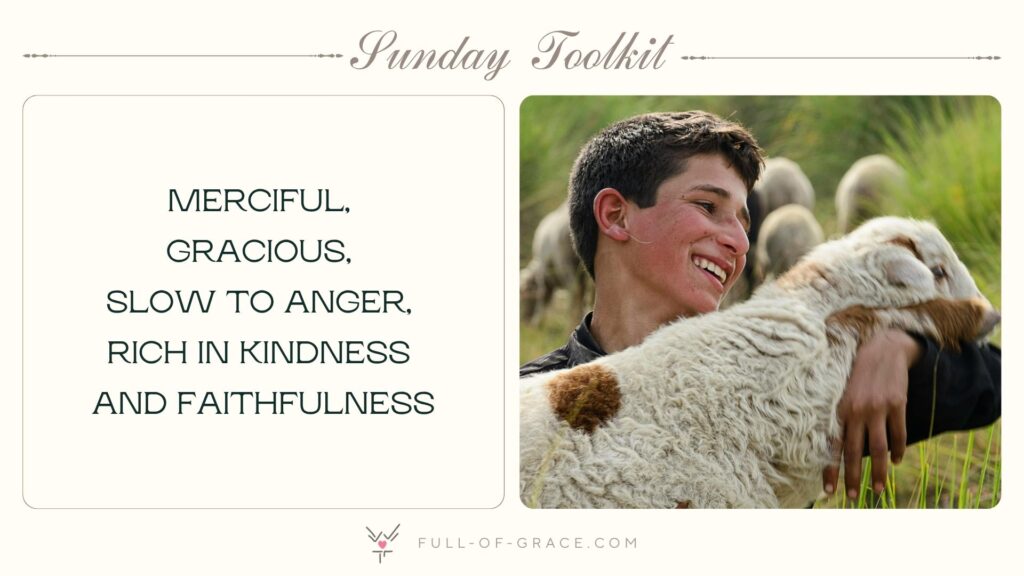
merciful, gracious, slow to anger, rich in kindness and faithfulness
is not a philosophical definition. It is an introduction. A God who cannot help but show who he is, passing before a single human being on a mountain and calling out his own attributes like a herald announcing himself to an audience of one.
That same movement reaches its fullness in the incarnation – God not merely passing before us but becoming one of us – and its communal expression in the Spirit poured out at Pentecost. Trinity Sunday is the moment the Church steps back and takes in the whole sweep of that movement and says: this is not three things. This is one God, whose very nature is to be given away.
Why This Sunday Exists
Trinity Sunday is one of the youngest feasts in the liturgical calendar. For the first thousand years of Christianity, there was no special day set aside for the Trinity – because, as Pope Alexander II observed in 1073, every day of the liturgical year was already devoted to the triune God. Every Sunday was Trinity Sunday. Every Mass was.
What changed was a crisis.
In the fourth century, a teaching began to spread – known as Arianism – which held that the Son was not fully divine, but a created being, exalted above all others yet ultimately subordinate to the Father. It was a tidy, reasonable, philosophically satisfying position. It made God more manageable. And it swept through the Church with extraordinary speed, attracting bishops, emperors, and theologians alike.
The Church’s response was not primarily a better argument. It was liturgy. Bishops composed Masses, offices, hymns – acts of worship that proclaimed the full divinity of the Son and the Spirit not as propositions to be debated but as names to be called upon. The Council of Nicaea in 325 gave the doctrine its creedal form. But the feast – the annual, embodied, communal act of standing up and saying this is who our God is – took centuries more to settle into place.
By the tenth century it was being celebrated across northern Europe. In 1334, Pope John XXII established it for the universal Church. It landed where it sits now – the first Sunday after Pentecost, after the Spirit has been given, after the full revelation has been made – as if to say: now that you have received everything, let us name what you have received.
The feast exists, in other words, because of false gods. Because the temptation to reduce the divine to something containable is not a medieval problem. It is the oldest problem. Golden calves, Babylonian statues, a philosophically satisfying Christ who doesn’t quite go all the way – the shape of the idol changes. The temptation doesn’t.
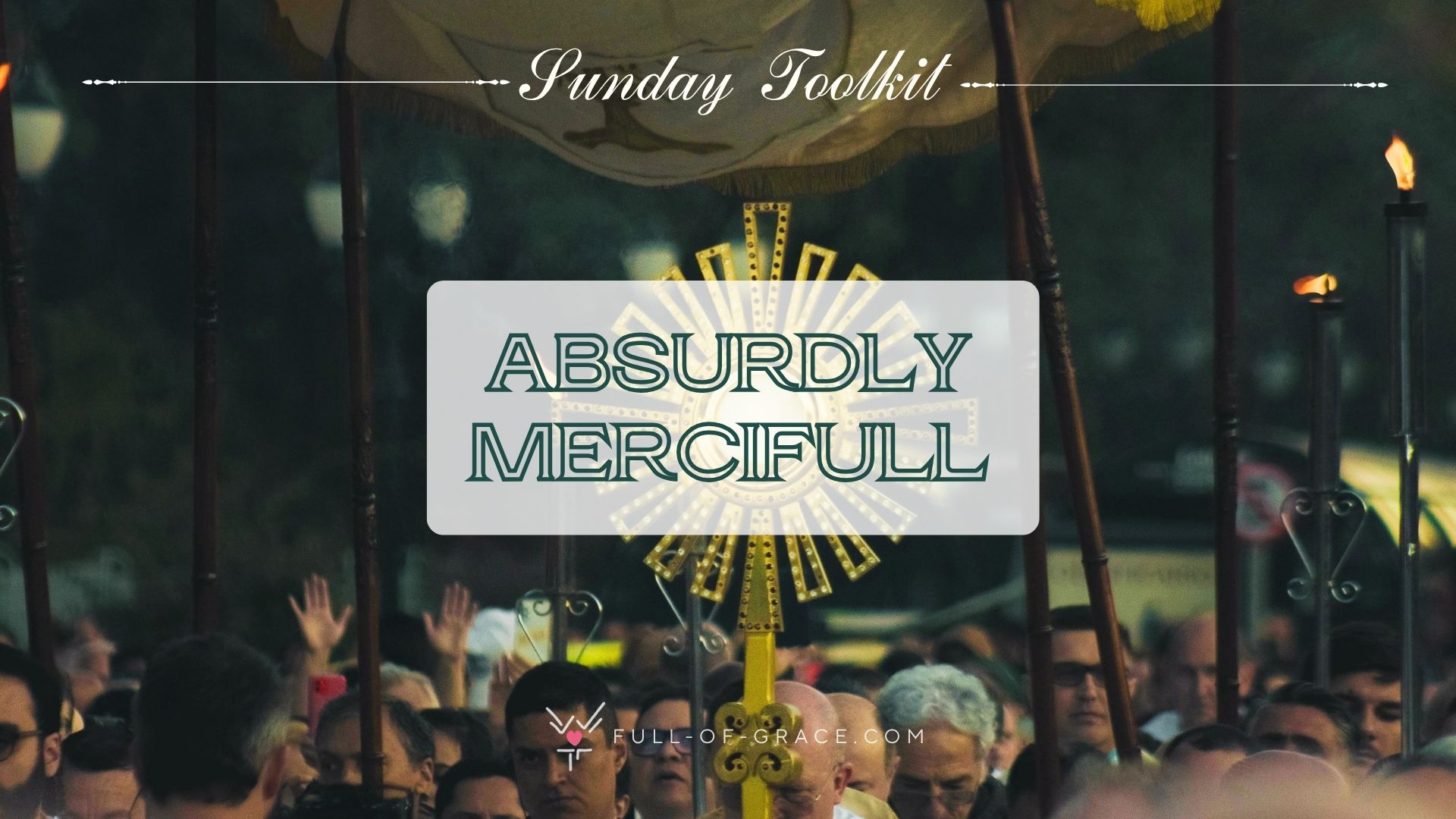
And every year, on this Sunday, the Church does what God did on Sinai. It parades. It calls out the Name. It says: this is who we worship. This is what we are holding.
The Spirit of This Sunday
The Trinity is not something you believe from the outside. It is something you enter. And you cannot enter it alone – not because the encounter isn’t personal, but because the God you are entering is already, eternally, a community of persons. Personal but not private. Communal but not collective.
What the readings hold together today is the full arc of how a name gets transmitted across generations. Moses receives it in the most intimate, almost absurd encounter imaginable – God parading God’s own mercy past a single human being – and immediately turns it outward into intercession for his people. Three young men carry it into a furnace on the strength of tradition alone, never having seen what Moses saw, and discover it is enough. Paul invokes it as the ground of repair for a community that is falling apart. John narrows the entire arc to a single point: one person, one question, one name.
Doctrine sustains you until encounter becomes possible. Encounter sends you back to the community. The community carries you when the fire comes. And somewhere in the middle of all of it, the question lands personally: do you believe it? Does it include you? Do you know what you are holding?

Symbols and Themes for Worship
Fire and cloud – the twin presences of Sinai. Light that cannot be looked at directly. The cleft in the rock where Moses hides while the glory passes.
The gesture of passing – procession, movement through space, something that arrives and continues. God does not stand still to be examined. God passes before us.
The doubled name – YHWH, YHWH – spoken twice. Before and after. The same mercy on both sides of whatever we have done.
The communal voice – the assembly speaking together, claiming the Name not privately but collectively. One sentence. One community.
White vestments – the colour of the feast, of light, of the fullness of revelation received.
Free Resources for This Sunday
Four resources, each standing completely alone. Take what your community needs.
Were It Not Written – Biblical Background
What actually happened on Sinai when God passed before Moses and called out the divine name? The rabbis found it almost too absurd to say. This research-focused post traces the Name from that ridiculous, intimate mountain procession through the furnace of three young men, through Paul’s triage of a fractured community, to the most-quoted verse in Christianity – and asks whether we still know what we’re holding. For liturgy teams, homilists, and Bible study groups.
full-of-grace.com/trinity_a_background/
One Sentence, One Community – Sunday Experience
A post-communion reflection built around the trinitarian blessing of 2 Corinthians 13 – the sentence the assembly has been saying for two thousand years without always hearing it. Five quiet movements through the real weight people carry into church on Sunday. One congregational response, said together over all of it. And a sentence to take home for the whole week. For presiders and liturgy coordinators.
full-of-grace.com/trinity_a_experience/
Set Apart – Prayer of the Faithful
Seven intercessions that hold the full arc of this Sunday: the Church’s double calling, leaders who abuse power, the corporations that have abolished Sunday rest, ourselves and the name we may have stopped hearing, those paying a real price for their faith today, those who prayed and felt silence, and the departed who handed the tradition to us. Complete with celebrant introduction and conclusion. Ready to use.
full-of-grace.com/trinity_a_pof/
Looking Ahead
Next Sunday, June 7, is the Solemnity of the Most Holy Body and Blood of Christ – Corpus Christi. We move from naming the God we worship to receiving that God bodily, in bread and wine. Trinity Sunday asks: do you know what you are holding? Corpus Christi answers with the most physical response possible: here. Take it. This is my body. The arc from one to the other is not accidental.
Need Something More?
If your community or parish needs a liturgy shaped specifically for your context – or if you’re a priest or ministry leader looking for accompaniment in preparing the word – I work with individuals and small groups through Threshold Work and parish coaching. You’re welcome to get in touch.