Third Sunday of Advent: When & Where We Are in the Scripture
Sunday, December 14, 2025 | Third Sunday of Advent, Year A
The Readings
First Reading: Isaiah 35:1-6a, 10
Responsorial Psalm: Psalm 146:6-10
Second Reading: James 5:7-10
Gospel: Matthew 11:2-11
This Sunday – Gaudete Sunday, “Rejoice Sunday” – stands as the rose-colored candle in our Advent wreath, a flicker of joy in the midst of purple penitence. But what kind of joy? What kind of rejoicing? The readings this week reveal a paradox that may be uncomfortable: the call to rejoice even when our own miracle doesn’t come, to celebrate kingdom breakthrough while we ourselves remain at the threshold.
Isaiah 35: The Promise from Exile
Isaiah 35 belongs to a pivotal section of the book (chapters 34-35), written during or anticipating Israel’s exile – that dark period when God’s glory had departed from the temple, when the people sat by the waters of Babylon weeping, when Jerusalem lay in ruins. The prophet speaks words of spectacular restoration: deserts blooming, blind eyes opening, deaf ears hearing, lame leaping like deer, mute tongues singing.
“Be strong, fear not! Here is your God, he comes with vindication; with divine recompense he comes to save you.” (Isaiah 35:4)
These are words spoken TO exile, not FROM the other side of exile. This is the pattern being given while the people are still captive, while the temple still lies in ruins, while nothing externally has changed. The measuring of hope happens in the darkness.
Notice what this passage establishes: a highway of holiness (Isaiah 35:8) – a sacred road through the desert for the returning exiles. A pattern. A measured way. A path that doesn’t exist yet but is being described with precision and confidence.
Psalm 146: The God Who Keeps Faith Forever
The responsorial psalm reinforces this theme of God’s faithfulness: “The LORD sets captives free… The LORD gives sight to the blind… The LORD raises up those who were bowed down.”
These are present-tense declarations about what God does – about His character and His pattern – even when we ourselves may not yet see it manifested in our own situation.
James 5: Patient Endurance While the Judge Stands at the Door
James, writing around 48 AD to Jewish Christians suffering persecution, calls for patience “until the coming of the Lord.” He uses the image of the farmer who must wait for both early and late rains – you cannot rush the harvest, you cannot force the fullness of time.
“Take as an example of hardship and patience, brothers and sisters, the prophets who spoke in the name of the Lord.” (James 5:10)
Here’s what’s sobering: many of those prophets died before seeing their prophecies fulfilled. They measured out the pattern, they proclaimed the word, they suffered faithfully – and they crossed into eternity before the harvest came. Their “patience” wasn’t rewarded with earthly vindication. Their faithfulness was its own completion.
The early Christians James addresses were likely thinking about the judgment coming in 70 AD when Rome would destroy Jerusalem – still 20+ years away. “The Judge is standing at the door” – but the door hasn’t opened yet. Wait. Endure. Be patient.
Matthew 11: John’s Question from Prison
And now we come to the Gospel – to John the Baptist, sitting in Herod’s prison, sending his disciples to ask Jesus: “Are you the one who is to come, or should we look for another?”

Let’s sit with the weight of this moment.
The Darkness of John’s Question
This is John – the forerunner, the one who leapt in his mother’s womb at Mary’s greeting, the voice crying in the wilderness, the one who baptized Jesus and saw the heavens torn open and the Spirit descending like a dove. The one who proclaimed “Behold, the Lamb of God who takes away the sin of the world!”
John didn’t proclaim this once. Careful review of the gospel (John 1:29; 35-36) points out that Jesus came repeatedly to where John was baptizing, and repeatedly John would raise his eyes and say “Behold, the Lamb of God.” This wasn’t a one-time announcement – it was John’s consistent, repeated witness.
And now this same John sits in prison asking: “Are you really the one?”
What must have happened in his heart? What doubt, what darkness, what wrestling? Imagine the ascetic who gave everything, the greatest born of women – now chained in Herod’s dungeon while the one he proclaimed walks free, performing miracles for everyone else.
Jesus’s Answer – And What’s Missing
Jesus sends back this response:
“Go and tell John what you hear and see: the blind regain their sight, the lame walk, lepers are cleansed, the deaf hear, the dead are raised, and the poor have the good news proclaimed to them. And blessed is the one who takes no offense at me.” (Matthew 11:4-6)
Jesus is quoting Isaiah (Is 26:19; 29:18; 35:4-6; 61:1-2) – the exact passages that John the Baptist would know by heart. These are the signs of the Messiah’s coming. Everything aligns.
Except.
The captives are not being set free. Those whom the LORD has ransomed will not return.
Jesus lists all the other signs. But to John, sitting in prison, the loudest line is the one Jesus doesn’t say.
Others are healed. John remains captive.
Others are freed. John’s chains stay locked.
Others receive their miracle. John’s deliverance… silence.
“Blessed is the one who takes no offense at me.”
Blessed is the one who can still rejoice when their particular salvation doesn’t come. Blessed is the one who can celebrate the kingdom’s breaking in while they themselves remain in the dark. Blessed (that means joyful) is the one who takes no offense when God heals everyone around them but their own prison door stays shut.
What Did You Go Out to See? The Reed as Measuring Standard
After John’s disciples leave, Jesus turns to the crowd with a series of rhetorical questions:
“What did you go out into the wilderness to see? A reed swayed by the wind?” (Matthew 11:7)
The answer is clearly: No.
But what does this reed imagery mean? Why this specific metaphor?
The Reed in Biblical Symbolism
In Scripture, the reed (qaneh in Hebrew, kalamos in Greek) carries multiple meanings:
1. Symbol of Weakness
Reeds bend flat under wind and spring back up – they’re unstable, swaying with every breeze. Isaiah uses this image for Egypt: “a staff of reed… if a man lean on it, it will pierce his hand” (Isaiah 36:6). A reed represents fickleness, instability, being “tossed by every wind of doctrine” (Ephesians 4:14).
2. The Measuring Reed
But there’s another meaning – and this is crucial for understanding John’s role.
In Ezekiel’s vision of the restored temple (Ezekiel 40-48), a “man whose appearance was like bronze” appears with “a measuring reed in his hand” (Ezekiel 40:3).
For ninety verses, this figure measures every dimension of the temple: gates, courts, walls, chambers. He establishes the pattern, the boundaries, the sacred architecture of where God’s glory will dwell.
And here’s what’s profound: This measuring happens AFTER God’s glory departed from the temple (Ezekiel 10) but BEFORE the glory returns (Ezekiel 43).
Between departure and return – the pattern is given.

John the Baptist as the Measuring Reed
When Jesus asks “What did you go out to see? A reed swayed by the wind?” he’s making a distinction:
You didn’t go out to see weakness. You went out to see the MEASURING REED.
John is that bronze figure with the measuring instrument, standing at the threshold between two ages, establishing the pattern, marking the boundaries, preparing the sacred space into which the Messiah will enter.
John’s ministry measures:
- What repentance looks like (the baptism)
- What holiness requires (the commandments)
- What the gap is (between where people are and where they need to be)
- What to watch for (“Behold, the Lamb of God”)
- What the new thing will be (baptism of Spirit and fire, not just water)
Without John’s measuring, how would anyone recognize Jesus when He appears? Without John saying “the Lamb of God,” how would anyone have the pattern to see it? Without John’s baptism, how would people understand the difference between water and Spirit?
John creates the capacity for people to receive Jesus.
He establishes the sacred architecture of expectation. He marks out the boundaries of the kingdom. He is the measuring reed – firm, unwavering, establishing the standard.
He lives by Law while pointing to Grace.
He keeps the commandments while proclaiming the One who will fulfill them.
He measures the new temple while standing in the old measurement system.
And yet Jesus says:
“Among those born of women there has been none greater than John the Baptist; yet the least in the kingdom of heaven is greater than he.” (Matthew 11:11)
Understanding “The Least in the Kingdom is Greater”
This statement has troubled readers for centuries. Is Jesus diminishing John? Is He saying John failed somehow?
Here, we need to pause and listen to a beautifully simple insight from Father Paweł Tober, a Polish priest whose observation unlocks this entire paradox:
The key is in the phrase: “among those born of women.”
John is the greatest among those born of women – born of flesh, of the old covenant, of the Law. He is the last and fullest expression of what human righteousness can achieve through keeping commandments.
But those in the kingdom? We are not only born of women – we are also born of the Spirit.
This connects directly to last Sunday’s Gospel, where John himself proclaimed: “I baptize you with water for repentance, but the one who is coming after me… will baptize you with the Holy Spirit and fire” (Matthew 3:11).
John points to this reality. He measures it out. He establishes the pattern. But he himself stands at the threshold between the two births.

The Shift: From Keeping to Fulfilling
This brings us to one of the most essential questions for Christian life:
What is the difference between keeping the law and fulfilling the law?
Jesus says: “Do not think that I have come to abolish the Law or the Prophets; I have not come to abolish them but to fulfill them” (Matthew 5:17). Yet everything in Christian practice looks different from Old Testament observance. How do these come together?
In Kabbalistic tradition, there’s a profound teaching about the ten sefirot – the divine attributes through which God interacts with creation. These are arranged in three pillars:
- The Pillar of Severity (law, boundaries, structure, judgment)
- The Pillar of Mercy (wisdom, creativity, spirit, grace)
- The Pillar of Balance (where the two meet in harmony)
There’s a rabbinic commentary that says God first tried to create the world based purely on law, on strict justice – and it couldn’t function. It was too rigid. Then God tried to create the world based purely on mercy, on complete freedom – and it also couldn’t exist. It was too chaotic. Creation requires both – structure AND spirit, law AND grace, held in dynamic balance.
This is the shift Jesus brings.
Letter and Spirit: The Law of Gleaning
Consider the Old Testament gleaning laws (Leviticus 19:9-10, Deuteronomy 24:19-21):
The Letter of the Law:
When you harvest your field, if grain falls or you miss a cluster of grapes, you cannot go back to pick it up. You must leave the corners of your field unharvested. You cannot make a second pass.
The Spirit of the Law:
This wasn’t arbitrary agricultural regulation. The purpose was care for the vulnerable – widows, orphans, foreigners had the right to follow the harvesters and gather what was left. This is how Ruth gleaned in Boaz’s field (Ruth 2) – not as charity that depended on his mood, but as her legal right under the Law.
The letter created boundaries and specific actions.
The spirit revealed the heart behind the boundaries: God’s care for the most vulnerable, provision built into the structure of society.
To keep the law is to follow the letter – don’t gather twice.
To fulfill the law is to embody the spirit – ensure the vulnerable are provided for, woven into the very fabric of how we live.
John’s Freedom
When people came out to see John in the wilderness, many were hoping he would sway the measuring reed – that the Messiah’s coming would mean the collapse of all law, total liberation from every oppressor, freedom from all boundaries.
But John stands firm. He doesn’t sway. He measures with precision.
And here’s the profound mystery: John becomes the first example of a different kind of freedom.
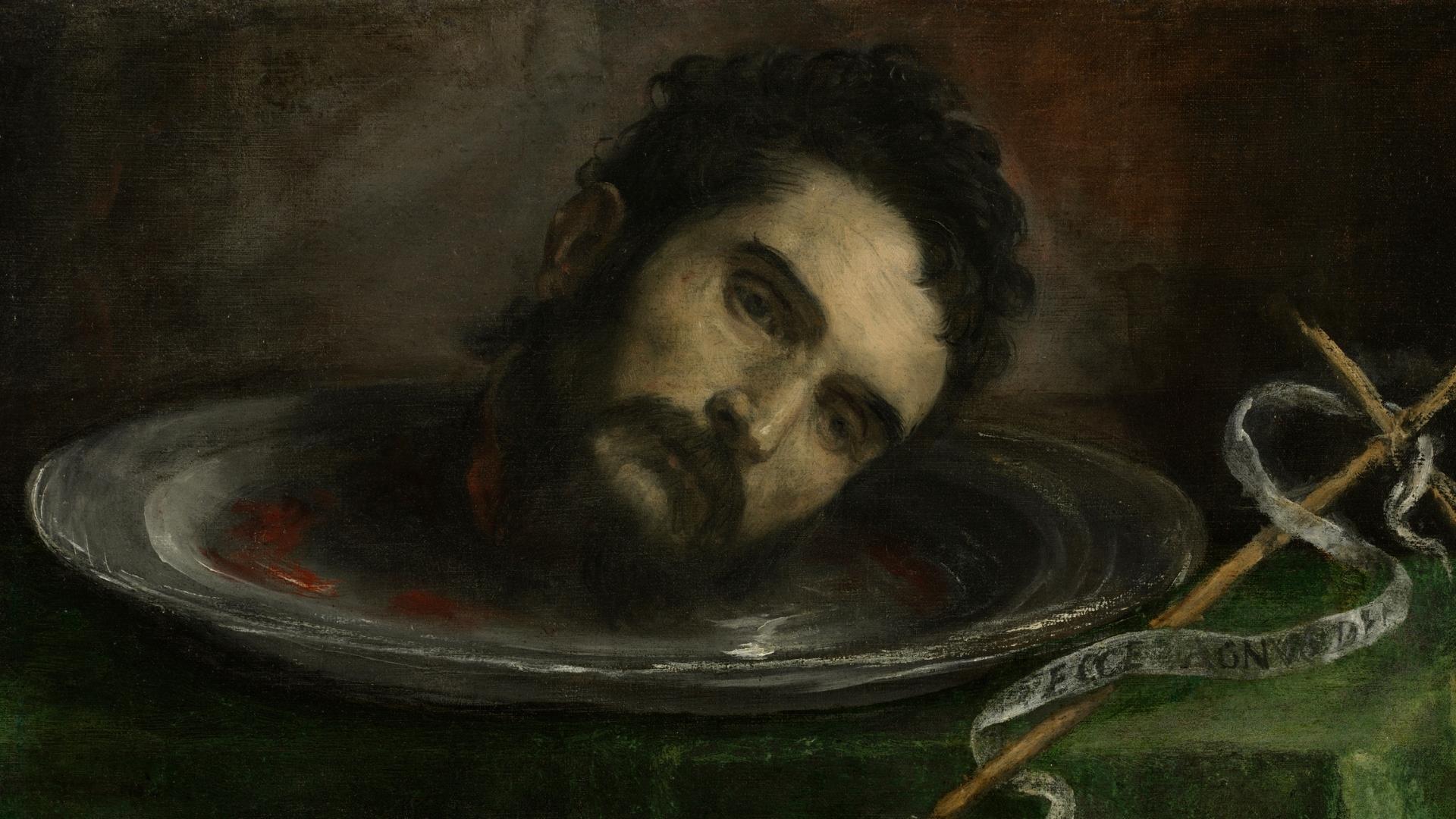
His prison door never opens. Herod never relents. He is beheaded as a political prisoner, his body thrown away.
Yet John dies as a free man – free in spirit.
This is, in a profound sense, his baptism of fire. Not the baptism he expected perhaps – not release from literal chains – but baptism into the freedom that comes from faithfulness unto death, from rejoicing for the kingdom’s sake rather than personal advantage, from measuring out sacred space he won’t inhabit knowing that others will cross the threshold he establishes.
The Catholic Church honors him as among the greatest saints precisely because he found this freedom. He was liberated – not from prison, but from the need for his own vindication. Not from death, but from death having the final word.
The Call of Gaudete Sunday
And so this Third Sunday of Advent – Gaudete, Rejoice – gives us:
From Isaiah: The pattern proclaimed in exile, hope measured out in darkness
From the Psalm: Present-tense declarations of God’s character even when we don’t yet see it
From James: The call to patient endurance, learning from prophets who died before their harvest
From Matthew: John’s question, Jesus’s answer, and the invitation to take no offense
Together, these readings call us to something profound:
Follow the law to its spirit, not merely to its letter.
This is the work of every generation of Christians from Jesus’s time until now – to understand the spirit in which the law was written, to constantly balance our need for structure with our call to embody grace, to find the third pillar where mercy and justice kiss.
We are born of women – yes. We live in bodies, in time, in structures and limitations.
But we are also born of the Spirit – and this changes everything.
Not by eliminating boundaries, but by revealing their purpose.
Not by destroying the measuring reed, but by understanding what it measures toward.
Not by opening every prison door instantly, but by offering freedom even to those whose doors stay locked.
John kept the law – the full measure of commandments.
Jesus fulfills the law – embodying what the commandments always pointed toward.
We who come after live in the fulfillment – not superior to John in righteousness, but recipients of what he could only prophesy. We dwell in the temple he measured. We cross the threshold where he stood. We receive the Spirit he proclaimed.
And we’re called to John’s same faithfulness: to rejoice for the sake of the kingdom, even when our particular miracle doesn’t come. To remain faithful, patient, expectant – following the spirit of God’s law into ever-deeper freedom, even when some of our chains remain.
Blessed – joyful, fulfilled – is the one who takes no offense at this.