How does your life taste before the first sip of your morning coffee?
Before you wake up enough to behave. To reason sensibly. To answer politely, wait your turn, and swallow back down everything that – in the great scheme of things, of course – probably wasn’t worth the twist anyway.
That unguarded moment. Before the performance starts. Before you check out your compressed version in a mirror:
YOUR ACTUAL LIFE – HOW DOES IT TASTE NEXT TO A PROMISE?
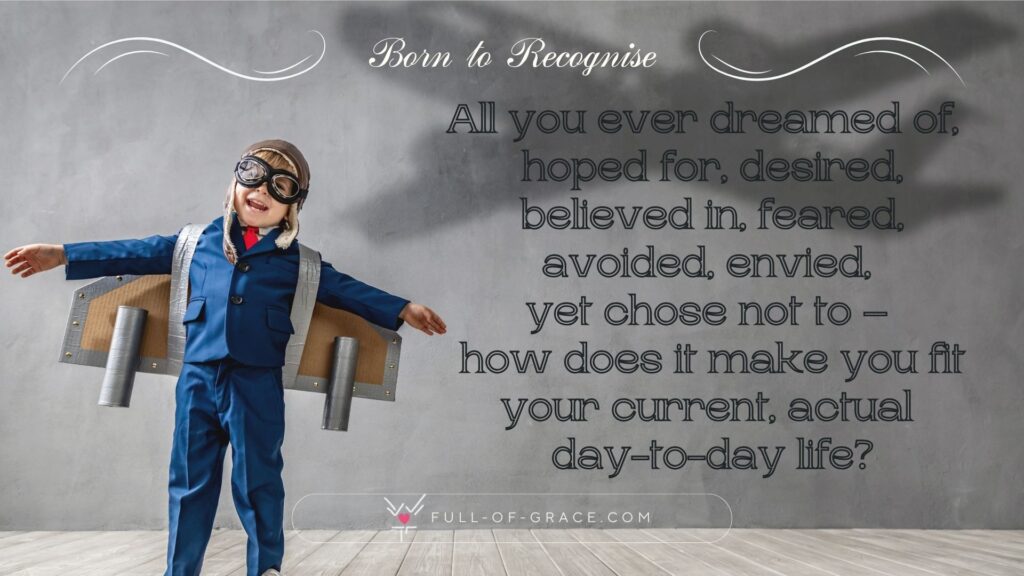
All you ever dreamed of, hoped for, desired, believed in, feared, avoided, envied, yet chose not to – how does it make you fit your current, actual day-to-day life?
This week invites you to follow the mystery of senses into the core and flesh of your mornings – see what resides under your eyelids when you take your life in first thing in the given day.
And no worries – this week is not going to come between you and your coffee! (I’m bold – not heroic.) But it invites you to hear the buzz in your ears which each morning plays on top of your alarm.
At the blessing of the lips, the words are simple:
Receive the sign of the cross on your lips, that you may respond to the Word of God.
Before we look for our response – let us have a closer look at our response-ability.
The practices this week are not here to improve you. They are here to show you the room you are actually standing in. Not the room you wish you had. Not the room you are working toward. The one you are in right now, with its actual dimensions, its actual light, its actual dust in the actual corners.
That is where the response begins.
Here is how it works
1. Read a line from Psalm 139 in Eugene Peterson’s translation:
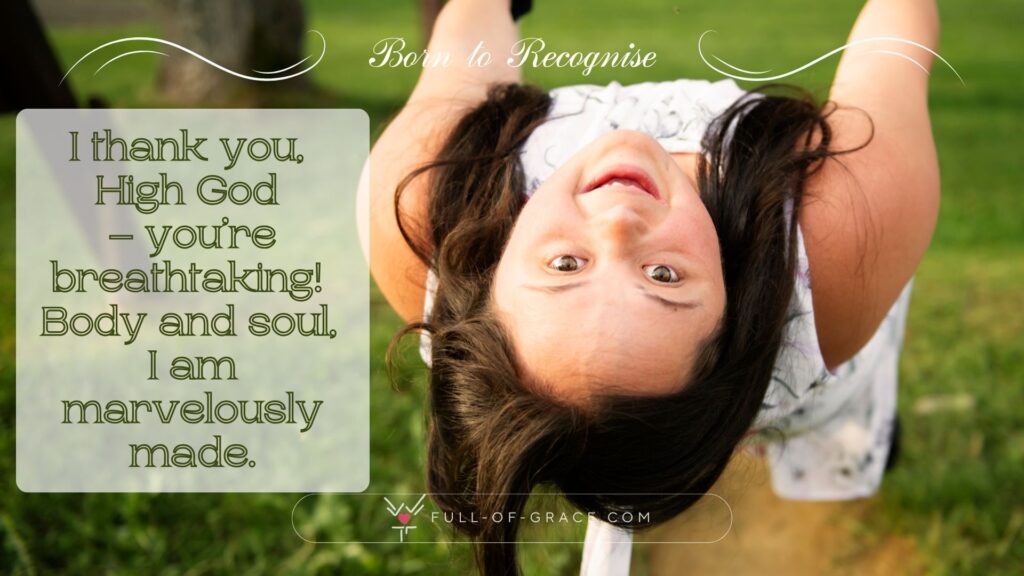
I thank you, High God – you’re breathtaking! Body and soul, I am marvelously made.
2. Not just slide with your eyes – really, physically read out loud. Please do not imagine doing this step, but actually let your lips make sound. Moreover, voice record yourself saying this and listen back. Go on, it really takes just one minute – dig out the voice memo app on your phone, press the red button, and let yourself be heard.
3. Find one image of what your life might look like if those two lines were true. An idea, example, inspiration. Whichever browser you use, go ahead and type “joyous”, “successful”, “fulfilled”, “blessed” – whatever word represents best your idea of how it would be if body and soul, you’d be marvelously made. Have it to hand: printed, screenshot, whatever works for you. Please do not postpone the practice until your hand-painted metaphor comes back lovely framed. Just do it.
4. Choose one practice from the list below and commit to returning to it each morning this week. (Yes, you might need to get up five to thirty minutes earlier than usual – but you can sip your coffee while you do any of the below.)
5. You’ve chosen. Was it the shortest one – or the most alive one? Just notice.
6. Some time between the first sip and the empty bottom of your mug – behold your image for a minute and bring that impression into your practice.
The Practices
Morning pages
– up to 30 minutes
Three pages A5, longhand, first thing that comes to your mind. No filter, no audience, no goal.
But this week they have a quiet centre: you have an image somewhere close, and you have two lines ringing somewhere in the back of your head. Let what honestly flies through you when your life meets your hopes land on the page. All of it. The gratitude if it’s there. The gap if it’s there. The thing you’ve been swallowing back down since approximately forever.
Three pages. Then close the notebook.
The shower
– 3 minutes
As your hands move – over your shoulders, your knees, your face, the back of your neck – just greet what you touch.
Good morning, knees. You are marvelously made.
Good morning, hands. You are marvelously made.
Not a morning shower person? Your fingertips work just fine, anywhere, any time of day. This is not about hygiene. This is about the Word landing somewhere specific – on the actual body it was spoken over.
The bitter file
– 15 minutes
Timer on.
You know the gap between the image and the actual Tuesday. This practice just asks you to write into it honestly – not the dramatic wounds, not the big story, but the daily residue. The low-grade stuff. What is, versus what was supposed to be.
No conclusions required. No resolution. Just fifteen minutes of not covering it with a nice shirt.
The daily visual
– 5 minutes
Your image shows you something. And somewhere in that image, something is missing from your actual life – and you know what it is.
This practice asks you to find a second image. Not of the destination, but of the missing piece itself. If the gap feels like your body, find an image of what closing that gap might look like – not the result, the movement toward it (if it’s diet – how does your idea of diet look like. If it’s sport – how does your idea of exercising look like). If the gap feels like loneliness, find an image of how you imagine that first moment of not being alone anymore might feel (is it an image of a date? volunteer work? community?)
One image. Keep it next to the first one.
Two minutes of I am
– 3 minutes (surprise! surprise!)
Once you looked at your image for a minute: Voice memo. Timer.
Finish the sentence: “I am…”
But this week, not who you generally are. Who you are when you stand next to your image. What moves through you when you hold your actual life up against what you hoped it might be. Bitter, lit up, deflated, quietly furious, unexpectedly hopeful – whatever is honestly there.
Two minutes. That’s all.
The gaze
– 10 minutes
Scan the room slowly. Trust the first thing your eyes settle on.
Stay there. Notice the colour, the texture, the light on it, the shadow behind it. For a few minutes, describe it to yourself – aloud if you’re alone, quietly if you’re not, on paper if you want to anchor it. Name what drew you there. Name what you see.
And when the naming empties out – just rest inside it. Let the last minutes be simply that: you, and the thing your eyes chose, and no particular need to do anything more with it.
The recall
– 3, 4, or 5 minutes (choices, choices…)
Look at your image for one minute. Really look.
Then close it, turn it over, put it face down.
Now – from memory – repaint it.
If you reach for your voice: two minutes of recording, naming what stayed, what your mind keeps returning to.
If you prefer silence: three minutes, eyes closed, just sitting with what the image left behind.
If you want to write: five minutes, half a page, whatever crosses your mind. No need to be thorough. Just honest.






One thought on “Before the First Sip”
Comments are closed.