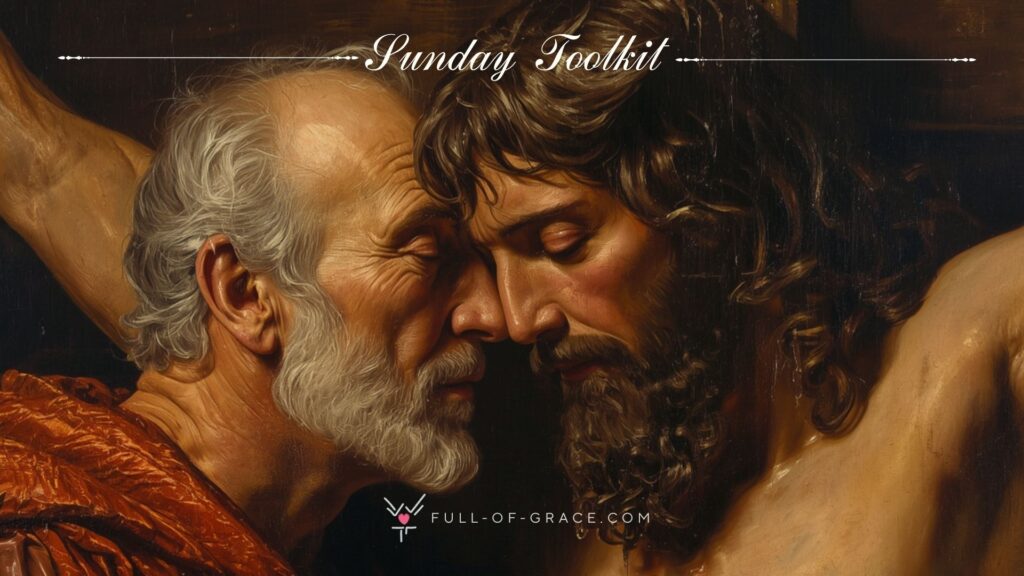
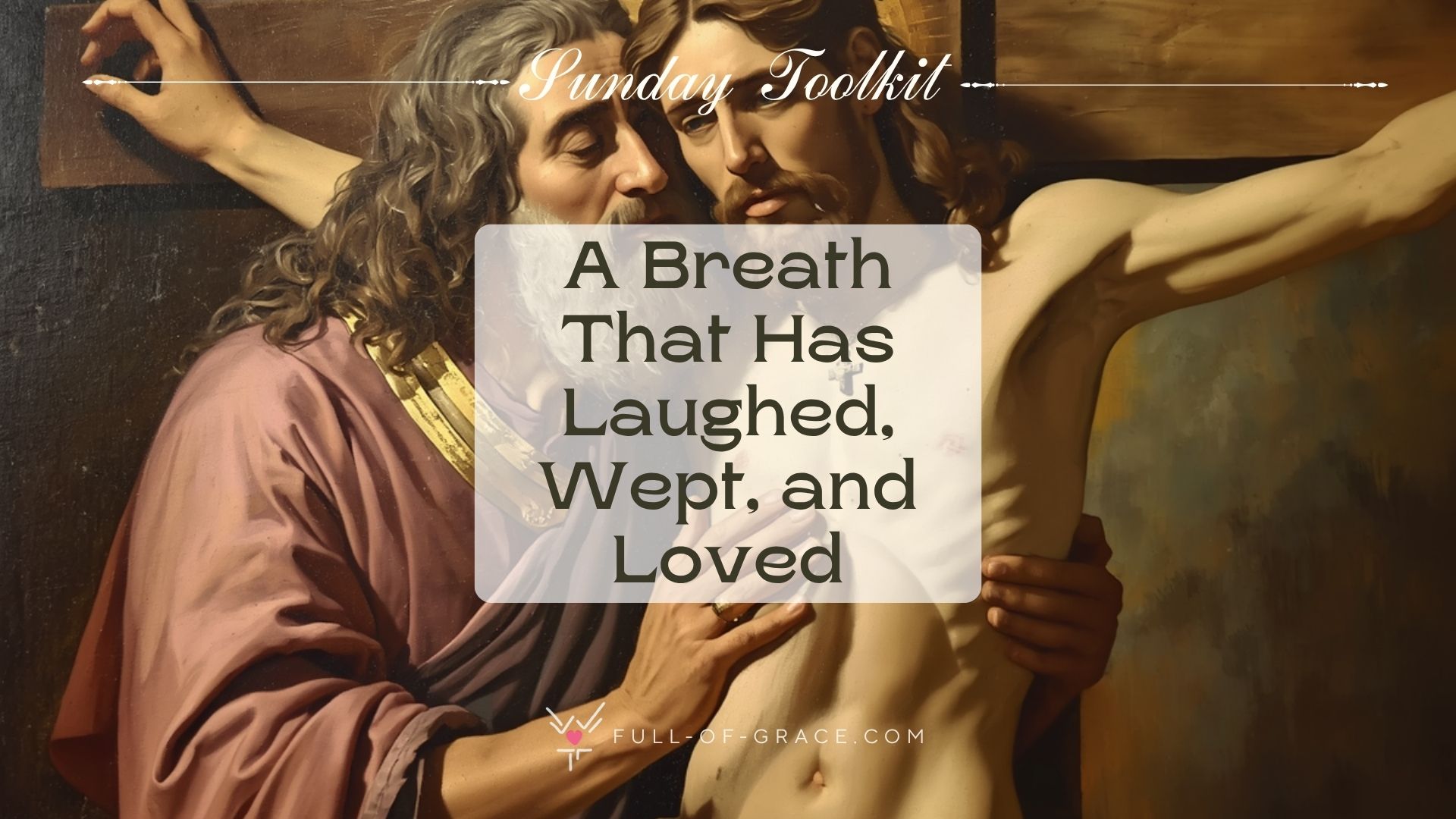
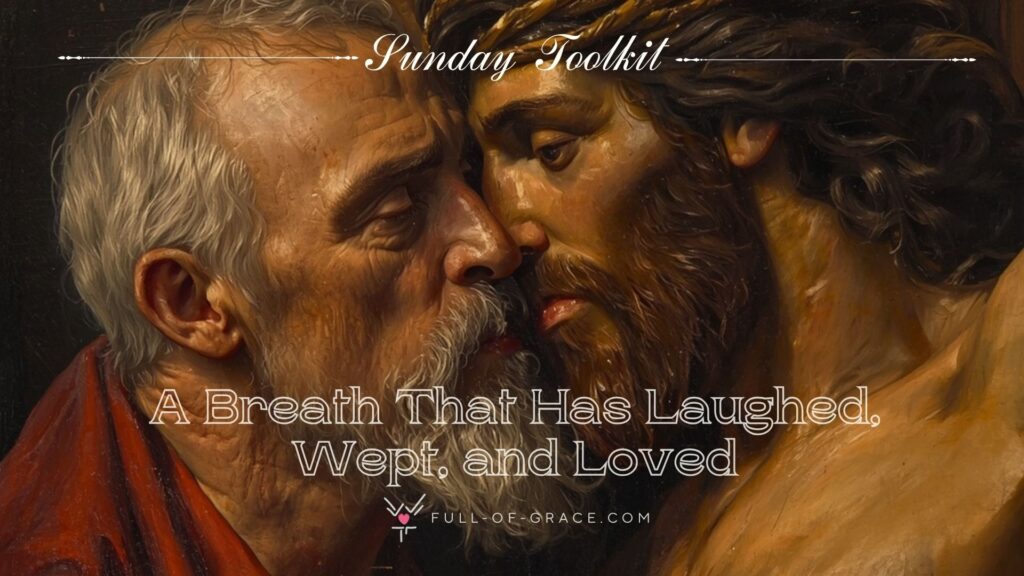
It began with a sentence so familiar I had almost stopped hearing it.
Father, into your hands I entrust my spirit. (Luke 23:46)
I have come across it so many times – on holy cards, in homilies, sung in rounds and harmonies – that it had grown a kind of protective coating. I thought I knew it. I moved past it. But this time I stopped. And I actually looked at what is there.
Why Jesus Changed One Word in Psalm 31:5
Jesus is quoting Psalm 31:5. Almost word for word. But with one change that alters the register. In the Psalm, the address is LORD – YHWH – the sacred, covenantal name. Ancient. Reverent. Jesus replaces it with a name of connection.
The same words. A completely different relationship. And that difference is everything.
“Abba”: What It Means That Jesus Said “Daddy”
We know that Jesus didn’t speak Greek. He spoke Aramaic. And scholars are nearly unanimous that every time Jesus addressed God – all sixty times recorded in the Gospels – he used the Aramaic word, Abba. Luke translates it into formal Greek for his audience. But the word in Jesus’ mouth, in his first language, his home language, was Abba.
And Abba is not Patēr.
In Ireland I noticed – with something between wonder and envy – that grown adults with children of their own still say Daddy. In Polish I would say Tata, sometimes even Tatuniu. That register. That assumption of being known before you have finished your sentence.
So I read the last words again with that substitution. And the entire sentence changed colour.
Daddy… Into your hands I entrust my spirit.
Why the Word “Abba” Brought Jesus to the Cross
The very intimacy of that word – Abba, the claim of a personal, familial relationship with God – was precisely what brought Jesus to the cross (Luke 22:66-71). The charge against him, at its theological core, was this: you made yourself too familiar with God. You spoke of him as though you are his son in some unprecedented, scandalous way.
And now, dying – the verdict carried out – Jesus opens his mouth for the last time.
And says Abba.
Not despite what it cost him. Because of it. As if to say: even here, stripped of everything, I will not use the formal word. This is worth dying for. The familiarity. The access. The Daddy. This is exactly what I came to say – not as doctrine, but as address.
What the Greek Words of Luke 23:46 Actually Say
εἰς (eis) – into, toward, as far as. A word of direction. Of movement toward a destination. He is not surrendering into void. He is going toward somewhere. Toward someone.
χεῖράς (cheiras (pronounced kheiras)) – hands. Not mind, not will, not authority. Hands. The most physical word possible. The word of craft, of tenderness. The hands of a potter. A parent lifting a child. The same hands that formed Adam from clay so that he could receive the breath of life.
παρατίθεμαι – paratithēmi. Usually translated “entrust” or “commend” – but its root meaning is to place alongside. Para: beside, near. And crucially, it is middle voice – the subject acting upon themselves. Not handing something over at arm’s length. More like: I bring myself near. I place myself alongside you.
τὸ πνεῦμά – pneuma. Breath. Wind. The breath of life. In Hebrew, the word is Ruah. The same word used throughout the Old Testament to describe God’s life-giving breath.
He is returning the Ruah – the breath that was breathed into human flesh at the beginning of everything. He is completing an arc that started in Genesis. The breath loaned to creation is being returned, through him, by him, as him.
A Breath That Has Laughed, Wept, and Loved
It is the breath that has been lived.
This breath has laughed. Has wept. Has caught in his throat at Lazarus’ tomb – and the text says there was groaning in him, turbulence, being torn – not serene acceptance but genuine grief. This breath has said I thirst. Has known hunger and the pleasure of a meal with friends. Has looked at a dying thief and promised him paradise.
All of that – the full weight of having been human – is carried in the breath when it returns. All the faces. All the joy and grief and friendship. All the love accumulated across thirty-three years of being a person among persons.
He doesn’t hand back a purified, disembodied essence. He returns everything.
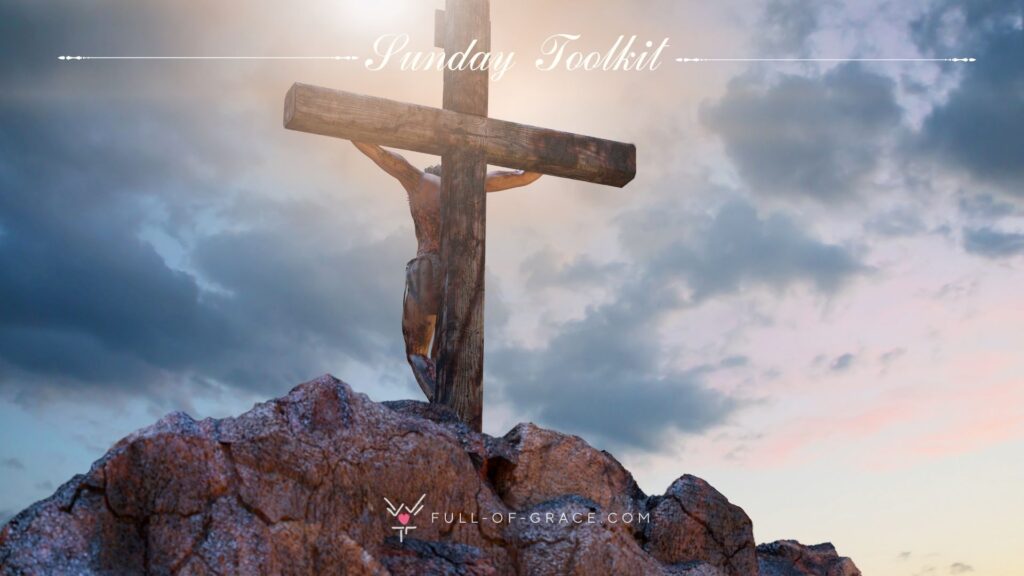
The Father Already Running: A Meeting, Not a Departure
This deeper nuance of Ruah not present in Pneuma made me come back and revisit the word used in Psalm 31:5 for hands receiving the spirit. It appears over 1860 times in the Old Testament. And in some of those places it carries the sense of reaching out. And suddenly I read the sentence differently.
Toward your reaching out – I bring myself near – this breath – mine.
It is not only Jesus moving. The sentence is a meeting. Two movements, each toward the other. The breath going out, and the Father already in motion. Already leaning forward. Already closing the distance.
The image that came to me was the father in the parable – the one we too quickly call the prodigal son’s story, though the father is the centre of it. Who sees his child still far off. Who runs. Who does not wait. Who closes the gap before the child has finished his prepared speech.
That father. The daddy. Already running.
So that the last breath of Jesus – carrying everything, all the joy and grief and exhaustion of a human life – never travels alone. Is met before it has gone any distance at all. Is received. Embraced.
The breath breathes out. And the Father breathes it in.
The last breath of Jesus is not a departure.
It is an arrival.
Gathered into God: Nothing Jesus Touched Is Left Orphaned
Every encounter, every tear, every moment of being known and knowing – none of it is left orphaned. The Father closes the gap not just for Jesus, but for everything Jesus carried: every human face he looked at, every hand he touched, every person who was ever un-lonelied by his presence. In the moment the breath is received, all of that is gathered into God. Nothing that was met by Jesus is ever again without God’s presence.
And underneath all the Greek and Hebrew, underneath all the scholarship – what is happening in that moment is something almost unbearably simple. A child, in pain, calls for his dad.
Daddy. I’m hurting. I’m coming. Meet me. Close every gap. Don’t let this breath be alone.
And the Abba, who was already running – receives it all.