
What do you do when your wallet is empty? When you’ve shaken out the last coins and there’s nothing left? What if that emptiness – that total letting go – is exactly where grace begins?
My throat is tight as I write this. There’s also a squeezing sensation, that familiar tightness in my abdomen that signals anxiety trying to take root. The problems are piling up – financial pressures mounting, difficulties multiplying – and I can feel despair pressing at the edges of my awareness, asking to be let in.
But it’s Advent. And I’m a professional believer.
This past Sunday, the Church gave us Romans 15:4:
For everything that was written in the past was written to teach us, so that through the endurance taught in the Scriptures and the encouragement they provide we might have hope. Everything written long ago was meant to teach us something about hope – from the examples of people who did not give up, who were helped by God.
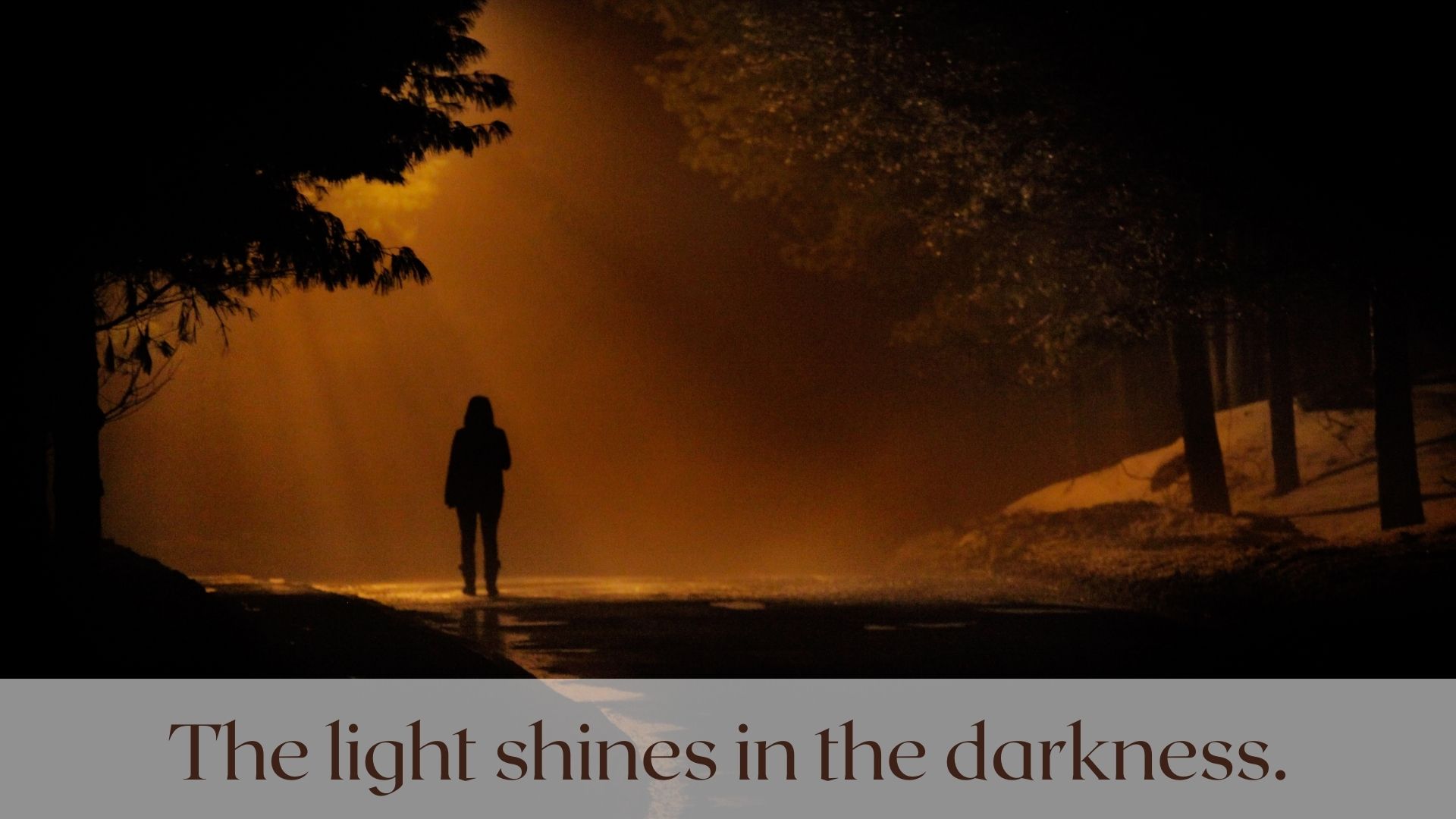
And so I’m choosing to practice zakhor – the Hebrew command to remember. Not passive nostalgia, but active, intentional remembering that brings past grace into present awareness. To remember that this is a dark hour, not a dark world. Not a dark life. Just a dark hour. And I’ve been in dark hours before.
Warsaw, Early 2000s
I was studying Polish language at the Warsaw University and Catholic theology at the Pontifical Faculty “Bobolanum” run by the Jesuits. To say I had no money would be an understatement. After paying rent for my tiny room, there was nothing left. Some weeks I went hungry – truly hungry, the kind where your body starts disappearing. There was a girl in my study group, bless her, who would sometimes appear at my door with a plate of sandwiches, having somehow intuited how desperate things were. But most days there was nothing. No bus fare. No food money. Just the gnawing emptiness.
One afternoon, I was walking with my friend Kinga along Krakowskie Przedmieście – that beautiful street leading out of Warsaw’s Old Town toward the university’s humanistic faculties. We were stopped by a couple asking for money. I shook my head and kept walking, commenting to Kinga that I never believed such requests.
She said quietly, “That would have been me a few years ago. There were times when, without the kindness of some stranger, I wouldn’t have had money for a bus ticket home.”
Something broke open in me. Imagining Kinga – bright, capable Kinga – standing on a street corner, holding out her hand. The courage it took for her to tell me that, to share something so shameful.
I turned around. Found the couple. Opened my wallet.

The Total Gift
This is the moment I need to tell you about carefully, because it matters.
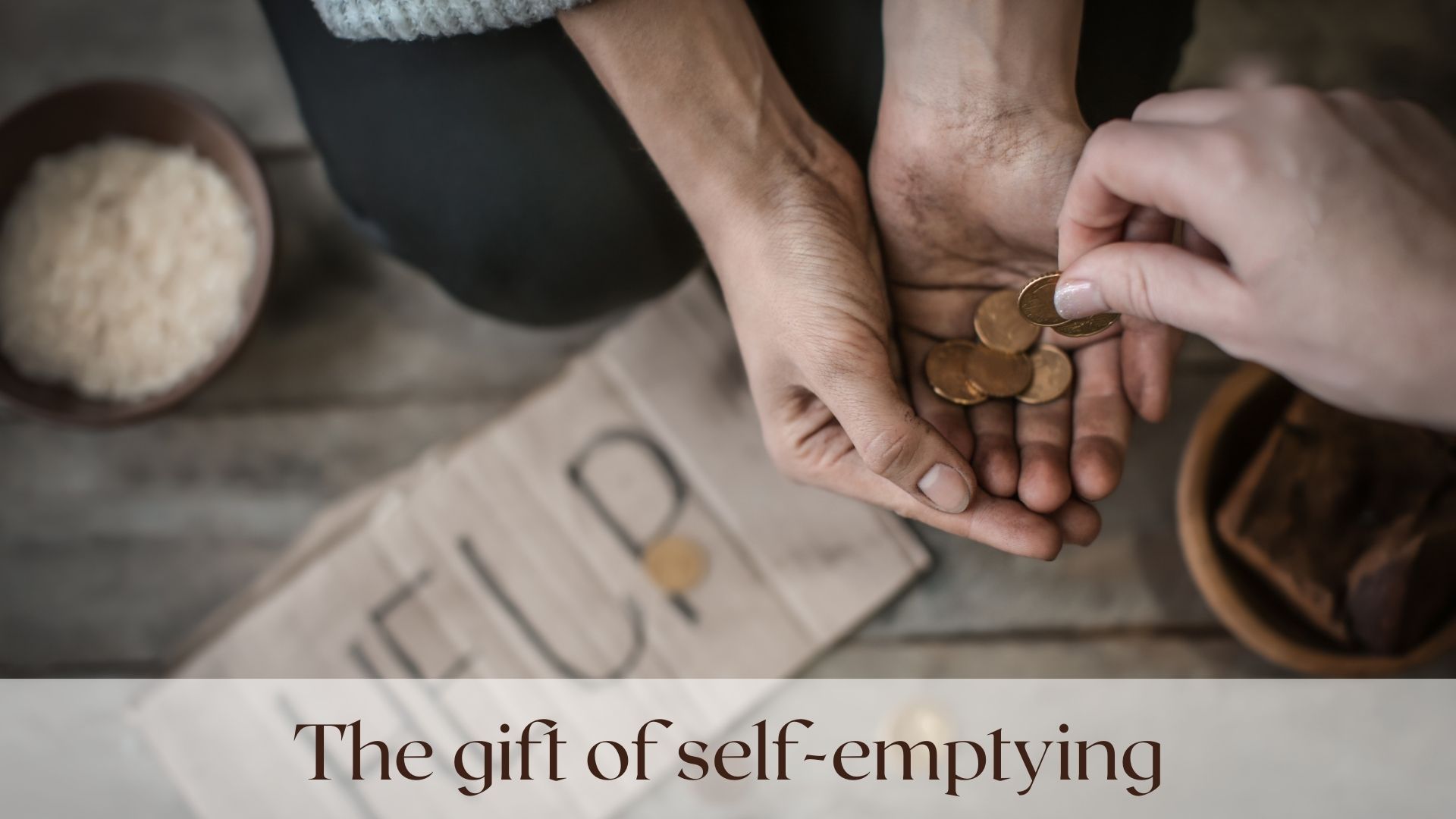
I didn’t count out some coins and keep the rest. I didn’t calculate what I might need later. I shook the wallet completely empty – every last coin falling into my palm. There was nothing left. No bills, no reserves, no safety net. Just coins, and I was giving them all.
The couple counted them in front of me: exactly 8.88 złoty. Back then, that could buy four loaves of bread. It was everything I had.
Kinga touched my arm, her eyes wide. “Are you sure?”
I shrugged. There was more hopelessness than faith in the gesture. I was already in so much trouble that 8.88 złoty didn’t seem to make much difference. But I heard myself say: “It will return to me multiplied.”
I walked away with an empty wallet and empty hands. Nothing held back. Total kenosis, total self-emptying, even if I didn’t have the theological language for it then.
The Same Day
That afternoon at the university, they posted the lists for social scholarships. I wasn’t supposed to qualify – they’d told me I didn’t meet the requirements. But I checked anyway, and there was my index number: 880 złoty. One hundred times what I’d given.
I stood in that hallway and laughed. Laughed until tears came, the absurdity and grace of it.
But it wasn’t finished.
A few weeks later, the Polish government passed a new law about scholarships for students at private universities. We weren’t supposed to get them – Catholic theology students at a Jesuit institution. But that year, the law changed. There was back-payment for the previous year.
I received exactly 8,880 złoty.
The Mathematics of Grace
8.88 → 880 → 8,880
Years later, I learned that in Kabbalistic tradition, the number 8 represents transcendence – grace breaking through the natural order. Seven days of creation, but the eighth day moves beyond the cycle into covenant and new life. The letter chet (ח), valued at 8, appears in chai (חי), meaning “life” itself.
The pattern was everywhere, as if God was leaving His signature in the mathematics.
But here’s what moves me most, looking back: I wasn’t faithful then. I wasn’t “sticking to God.” I studied theology academically but kept God at arm’s length. I was far from Him.
And yet He was not far from me.
Grace preceded my faithfulness. Grace found me in my emptiness, in my near-hopelessness, in my fatalistic shrug. Grace met me at the moment of total letting go, when I held nothing back. This is pure Advent theology – Emmanuel, God with us, even when we’re not fully with God.
Not Alone
I wasn’t alone on Krakowskie Przedmieście that day. Kinga was with me. And it was her vulnerability – her courage to share something shameful about her past poverty – that opened the space for my generosity. Without her honest words, I would have walked past that couple.
This is the Body of Christ functioning as it should: one person’s willingness to be broken open enabling another’s act of grace. We don’t perform faith in isolation. We’re held by each other’s stories, by each other’s witness. Let us be courage to one another.
Zakhor: Remember
Now, years later, facing financial difficulty again, I practice zakhor. I actively, intentionally remember. Not to earn anything or prove anything, but to let past grace speak to present fear.
The tightness in my abdomen is still there. The tears still come. But alongside them is this memory, this pattern, this evidence that I’ve been in dark hours before and light came. That God has a history of meeting me in my emptiness, of seeing the total gift, the shaking out of the last coins, the letting go of everything.
This is what Romans 15:4 means: that the stories from long ago – from Scripture, yes, but also from our own lives – were written to teach us something about hope. To show us the pattern of divine provision, not as a guarantee that money will multiply (that’s not the promise), but as testimony that we are held, even in the dark hour.
Not a dark world.
Not a dark life.
Just a dark hour.
And Advent teaches us to wait in that darkness, trusting the light is coming.

Share Your Story
Here’s my invitation to you: Do you have a story of provision? A moment when grace met you, perhaps in disguise, perhaps when you weren’t even looking for it?
Let us hear it.
Contact me directly – send me your story of hope, your memory of God’s provision. Let your testimony be shaped into a spiritual gift. Sometimes we need help finding the words for the grace we’ve experienced. Sometimes we need someone to say: yes, that matters, that’s worth remembering and sharing.
Let us be courage to one another. Let us spread hope by sharing how God – often in disguise – comes and meets us in our need.
natalia.mitchell@full-of-grace.com
Because the dark hour is real. But when we share our stories of light, we remind each other: it’s not the whole story.