About all what we bring to bed, a particular kind of intimacy and organising our entire self around not being wounded ever again.
Plus the intensity as anaesthetic and what therapy cannot do alone – For those who long to be restored to right relationship.
All we had in paradise
We talk a lot about what happened in Eden — the fruit, the serpent, the fall. But there’s something that gets less attention: the sequence.
An old Talmudic tradition says we didn’t manage to stay even one day in paradise. Adam didn’t even sleep there. He arrived, he breathed, he named things, he loved, he fell, he was gone.
And in the eighth hour of Adam and Eve’s presence in Eden — they ascended to bed as two and descended as four. Before the sin. Before the hiding. Before the fig leaves. Two became four because their premature intimacy multiplied identities — and into the bed they each brought an idea of the other. Adam’s version of Eve. Eve’s version of Adam.
There were already four people there before anything had been lost.
I have been sitting with this for weeks. And the grief of that loss, instead of fading away, becomes increasingly familiar.

The Nakedness Before the Nakedness
Before the fruit, before the hiding, there is this line: they were both naked, and they were not ashamed. Not just physically. In the Hebrew tradition, nakedness in this sense points toward full disclosure — nothing concealed, nothing performed. They were completely seen and completely at ease with being seen.
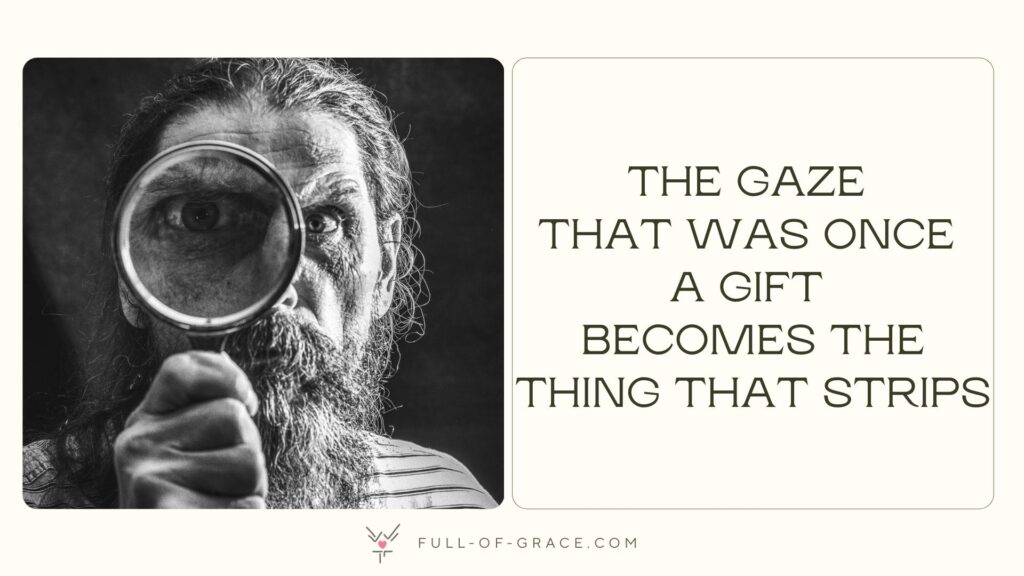
And then comes the moment that is almost too painful to sit with. After they eat, after the eyes open — the clothing of light is gone. What the text gives us next is not tenderness. It’s announcement. The gaze that was once a gift becomes the thing that strips.
There is a particular kind of intimacy that doesn’t build toward nakedness — it starts there. And starting there, without the foundations, without the patient slow work of actually knowing the other person, can have a strange and terrible effect: it strips them of the very mystery that drew you in. The light goes. What’s left is just skin — and in a world unlike Eden, there is plenty of other skin to choose from.
I wrote about something like this in my Camino Crush piece — how the intensity of pilgrimage can create intimacy that ordinary life cannot hold. How we fall in love with the version of someone that only exists in exceptional circumstances. And then the morning comes, and both people are standing in the kitchen not knowing what to do with each other.
Not Masks. Identities.
I want to be careful about the word masks here, because it implies a conscious choice — something we pick up and put on. What I think actually happens is more permanent and more complicated than that.
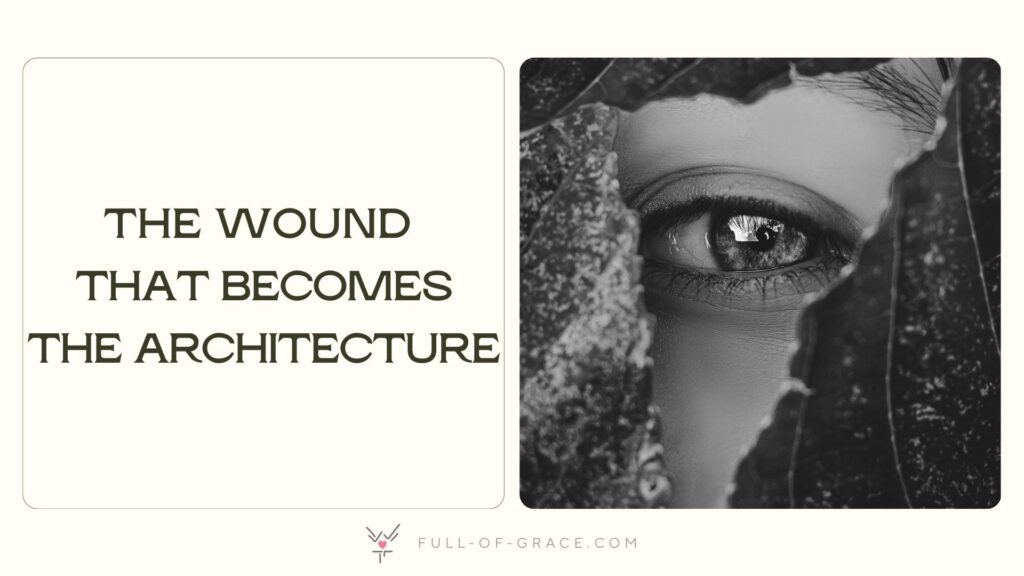
When something wounds us early enough, we don’t wear it as a mask. We build ourselves around it. The wound becomes the architecture. And we enter relationships not as a person with a wound but as a person who has organised their entire self around not being wounded that way again.
I’ve watched people do this in every direction. The one who was abandoned becomes The Independent One — needing no one, asking for nothing, fluent in leaving before they’re left. The one who was controlled becomes The Free Spirit — allergic to commitment, disappearing whenever someone gets too close. The one who was shamed for their desires becomes The Chaste One — and here I want to say something uncomfortable:
Avoiding the body does not automatically mean you have learned to be present to someone. There are people who played the chastity card their whole lives and never once allowed themselves to be genuinely touched — not on any level that counts. The virgin identity is still an identity. And an identity may still become a wall.
This is not a criticism. I say it because I’ve been all of these people at different points. The identity isn’t a failure of character — it’s an extraordinarily creative solution to an unbearable problem. It kept us safe long enough to get here. The question Lent asks — quietly, without judgment — is whether we still need it.
The Two Impossible Extremes
There is a version of the spiritual journey that goes like this: I will do the inner work first. I will know myself before I try to be known by someone else. I will become whole before I offer myself to another.
And there is wisdom in this. The impulse to do the work, to not drag old wreckage into new relationships — that’s not neurotic, that’s responsible. I lived this version for a while. Therapy, self-development, spiritual direction. Setting my house in order.
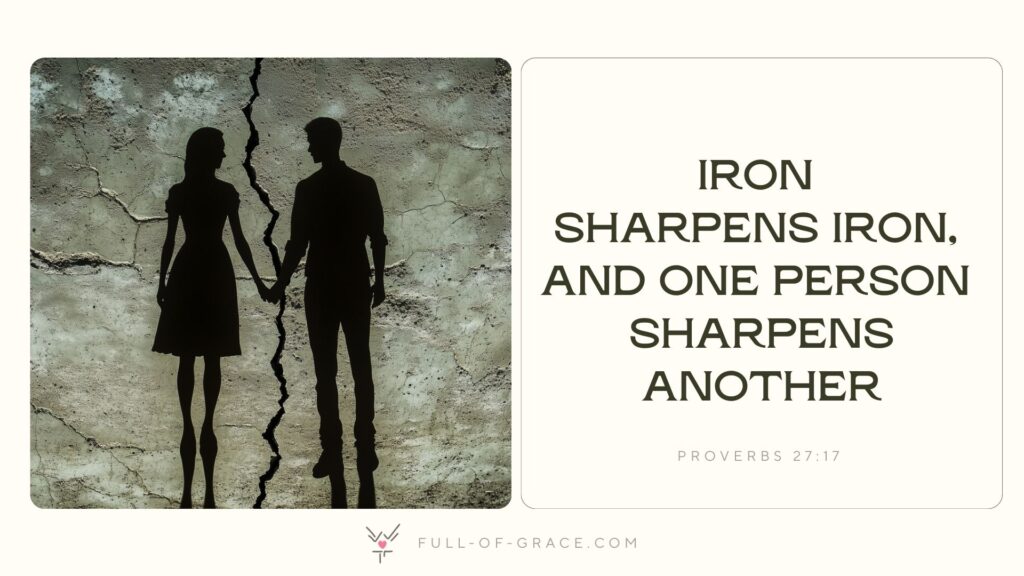
But Proverbs 27:17 says something I keep returning to: iron sharpens iron, and one person sharpens another. There is a kind of self-knowledge that is only possible in the friction of actual encounter. The parts of you that only come to the surface when you are genuinely known by another person — those parts cannot be discovered in solitude. They don’t exist yet. They require the contact.
And then there is the opposite extreme, which is equally seductive and equally a dead end: using relationship to avoid seeing yourself. Staying perpetually in the falling-in-love stage because the high of it all drowns out the quieter voice that has something less comfortable to say. The intensity as anaesthetic.
Yet no orgasm lasts forever. The morning always comes. And what you find in the morning is the same self you brought to bed the night before, plus now there is another person in the room who is also starting to see it.
Neither extreme is the answer. Not the elaborate self-preparation that never quite finishes, and not the plunge into intimacy that bypasses the self entirely. We are somewhere in the middle of this, all of us, always.
What Therapy Cannot Do Alone
I want to be honest about something here, because I’m a coach and I believe in the value of the work — but I’ve also started to notice its limits in a particular direction.
We go into the coaching or therapeutic space to discover our truth. We learn our attachment styles, we map our wounds, we practice setting limits, we meet the younger versions of ourselves and offer them what they needed. This is real and necessary work. But I have sat with people who have done years of it and are exquisitely fluent in their own inner world — and somehow, in all that fluency, have lost the capacity to be genuinely surprised by another person. To allow the other to be other. Not a mirror. Not a case study. Not a role in the drama of my growth.
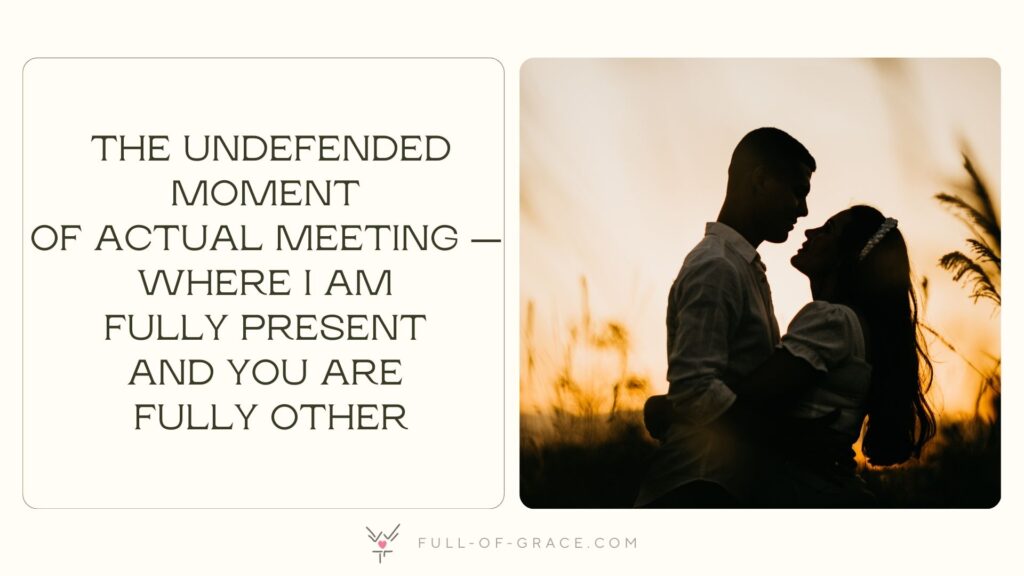
Martin Buber called it the difference between I-It and I-Thou. I-It treats the other as a function, an object, something to be understood and categorised and managed. I-Thou is the rare, undefended moment of actual meeting — where I am fully present and you are fully other, and neither of us is a project.
The question I’ve been sitting with is this: how much of what we call personal development is actually a more sophisticated version of fig leaves? I understand myself now, therefore I am safe. You cannot reach the wound because I have mapped it, named it, processed it. I have exchanged one kind of hiding for a more educated one.
I’m not saying don’t do the work. Do the work. But the goal of the work cannot be invulnerability. It has to be a greater capacity to be present — which means a greater capacity to be moved.
Self as Verb
Here is what I have come to think, though I hold it loosely and expect it to change:
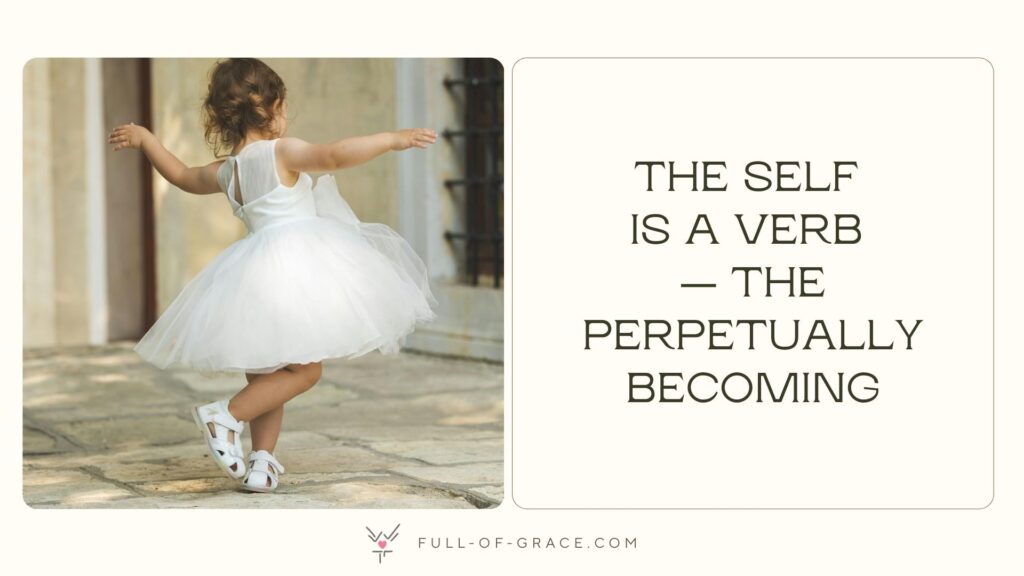
The self is not a noun to be discovered before you risk relationship. It is a verb — the perpetually becoming. And so is the person beside you.
There is no recipe for a relationship. There is no syllabus you complete and then are ready. There is no version of another person that stays fixed long enough for you to have them figured out — and if you think you do, that is the moment to be most worried, because what you’re relating to is no longer them. It’s the idea you’ve built of them. You have ascended as two and descended as four.
The question I am trying to learn to ask — in my marriage, in my friendships, in my relationship with God — is not who are you? as if the answer were stable. It’s who are you becoming, and can I stay curious about that? And the harder version: can I allow you to see who I am becoming, and not just the version of me that already has it together?
Walking beside someone rather than in their shadow. Hand in hand rather than carrying each other. This sounds simple and it is the work of a lifetime.
What Lent Has to Do With This
In the desert, Jesus refuses every projected identity. You are the provider. You are the spectacle. You are the king. He refuses all of them — not with superior argument, but with simple presence. I am here. I am hungry. I am not what you want me to be.
I think this is what Christians mean by keeping your gaze on Christ — not as a way of avoiding the people beside you, but as the only thing that gives you enough grounding to stop needing them to be someone they’re not. When I know I am held, I can afford to let you be genuinely other. I don’t need you to be my saviour because I already have one. I don’t need you to confirm my worth because that question has been answered elsewhere.

This is what Paul means, I think, when he says that through one man’s obedience, the many will be made right. Not made perfect. Made right. Restored to right relationship. To the capacity for presence.
The good news is not that we stop carrying our projections overnight. The good news is that there is a force — call it the Spirit, call it grace — that keeps loosening our grip on the fixed idea. That keeps making the other person surprising. That keeps making us, to our own startled recognition, surprising too.
We ascended as two. Somewhere in all of this — slowly, imperfectly, together — we are learning to descend as two again.
For sitting with this week:
- What identity did you build after a wound — and is it still serving you, or have you outgrown it?
- Where do you relate to the fixed idea of someone rather than the person still becoming?
- What would it look like, this week, to be genuinely curious rather than already knowing?
Want to go deeper into the scripture behind this reflection? The Biblical Background for the First Sunday of Lent explores the Sanhedrin 38b passage, the Adam–Christ typology in Romans 5, and the Hebrew layers of the temptation narrative.
On the journey from Light to Skin to Spirit.
More about why understanding your relationship patterns isn’t enough to change them.