

Quick Reference
Date: 3 May 2026
Season: Easter – Fifth Sunday
Readings: Acts 6:1–7 · Psalm 33:1–2, 4–5, 18–19 · 1 Peter 2:4–9 · John 14:1–12
USCCB: usccb.org – Fifth Sunday of Easter Year A
One-Sentence Theme
The heart must be emptied of its own weight before Christ can dwell there – from stone to song, the whole people is being made resonant.
The Readings in Context
First Reading – Acts 6:1–7
Historical Placing
We are in Jerusalem, approximately 33–36 CE, within the first years of the apostolic community. The Jerusalem church is still overwhelmingly Jewish in composition, but a fault line is appearing between Aramaic-speaking Jews native to the land and Greek-speaking Jews of the diaspora – the Hellenistai – who have returned to Jerusalem and now form a distinct cultural community within the church. This is not yet a gentile question; it is an intra-Jewish fracture along lines of language, geography, and possibly liturgical practice. The text itself is part of Luke’s second volume, written c. 80–90 CE, looking back at the early community’s growing pains with theological perspective and pastoral purpose.
What Is Happening
A practical crisis has emerged: the daily distribution of food to widows – a central act of covenant care in Jewish life, rooted in the Torah’s provision for the most vulnerable – is failing the Hellenist widows. The Twelve respond not by taking more control but by distributing authority. They call the whole community together, name their own primary vocation (prayer and the ministry of the word), and invite the community to choose seven men of good standing, full of the Spirit and wisdom, to carry the table-service.
The seven names elected are all Greek – Stephanos, Philippos, Prochoros, Nikanor, Timon, Parmenas, and Nikolaos the proselyte from Antioch. The community has answered the injustice by elevating the very group that was being overlooked. The apostles lay hands on them: the same gesture of blessing and commissioning they themselves received.
The passage closes with a summary statement that Luke uses to mark stages of growth: the word of God continued to spread, the number of disciples in Jerusalem was greatly increased, and – startlingly – a large group of priests made their submission to the faith (Greek: hypēkouon tē pistei, literally they listened-under to the faith, or they became obedient to the faith). That unusual expression will be worth returning to.
Key Insight
This passage is not primarily about administration. It is about the entire community – not its heroic individuals – as the carrier of sacred life. The Twelve do not do everything. The seven do not simply serve tables; Stephen will go on to be the first martyr, Philip will open the gospel to the Samaritans and to an Ethiopian official. Distribution of responsibility is not diminishment. It is how the word spreads.
It is also worth remembering that The Twelve who are now too busy attending to the Word, themselves started with carrying the bread and picking up leftovers (for example Matthew 14:19-20)
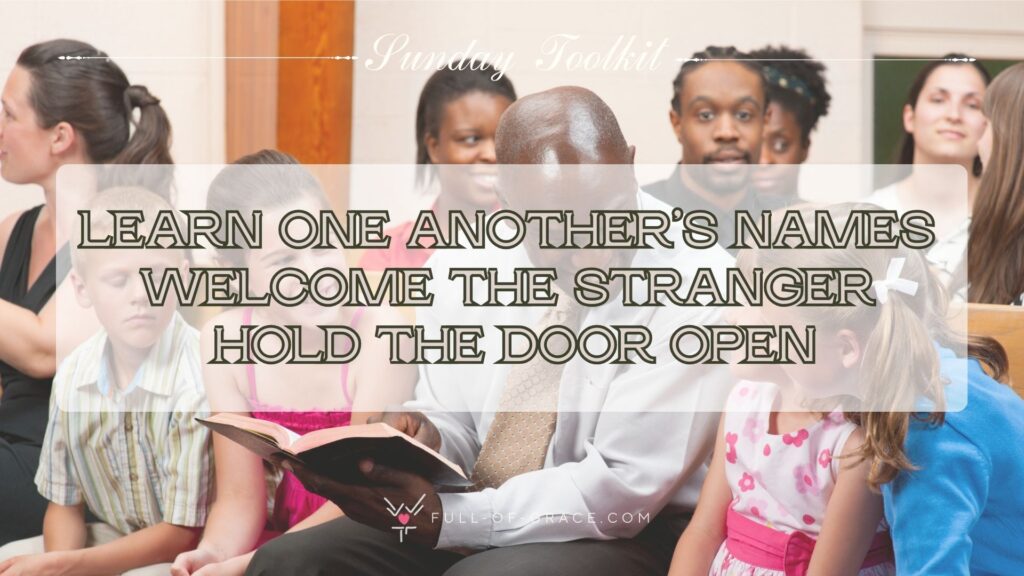
Also the names matter. They knew each other by name. The community that cannot name one another cannot truly be the body. This is worth pressing in our own time: do we know the names of the people in the pew beside us?
The Jethro Echo
Behind this scene stands the ancient wisdom of Exodus 18, when Moses’s father-in-law Jethro visits the Israelite camp and sees Moses exhausting himself as sole judge and counsellor for the entire people. Jethro’s advice – choose capable people from among the whole community, distribute the work, and reserve only the weightiest matters for yourself – is not management theory. It is a theology of the whole people as the vessel of God’s work. Israel was called at Sinai to be a kingdom of priests, a holy nation (Exodus 19:6). That vocation requires the whole people, not a class of specialists.
The early church is re-learning this. And 1 Peter will shortly name it with full theological force.
On hypēkouon tē pistei – Submission to the Faith
The Irish Missal’s expression a large group of priests made their submission to the faith carries an unusual weight. The Greek verb is hypakouō – to listen from under, to become attentive beneath something, to yield to its authority. This is not intellectual assent. It is closer to the Hebrew emunah – the full-body lean into what is trusted. The priests did not merely agree with a new proposition. They placed themselves beneath the weight of a new reality and let it govern them.
This quietly raises the question that will run through all four readings: what is faith, exactly? What did it mean in the Acts community, and how does that differ from what we habitually mean by it?
Responsorial Psalm – Psalm 33:1–2, 4–5, 18–19
Historical Placing
Psalm 33 is an acrostic-adjacent hymn of praise – some scholars note it has 22 verses corresponding to the 22 letters of the Hebrew alphabet, though it is not a strict alphabetic acrostic. It belongs to the wisdom-influenced praise tradition, likely post-exilic in its present form, though drawing on older liturgical material. Its home is the assembly at worship – it is a communal piece, addressed to the righteous (tsaddikim) and the upright (yesharim) in the opening verse, calling the gathered people into resonance.
What Is Happening
The psalm calls the community to sing – and does so with specificity. Ring out your joy (rannenu, from ranan – a piercing, ringing cry of exultation), give thanks upon the harp, sing with a ten-stringed lute. The call is not to feel something privately but to sound it outwardly, communally, with the whole instrument of the body. Then the psalm grounds this call in the character of God: his word is faithful, all his works are to be trusted, he loves justice and right.
The verses selected for this Sunday’s liturgy include the watching God: the Lord looks on those who revere him, on those who hope in his love, to rescue their souls from death, to keep them alive in famine. The God who watches is not indifferent – he is attentive, and his attention is saving.
Key Insight – The Hebrew of the Heart
The opening verse – for praise is fitting for loyal hearts – introduces the lev, the Hebrew heart. Unlike its Greek counterpart kardia (which already leans toward the emotional and volitional), the Hebrew lev is the organ of the entire inner life: understanding, wisdom, discernment, decision, desire, emotion, and – crucially – the place where meaning is made. The lev is where the human being processes reality and determines its weight.
In biblical anthropology, the heart can be made of stone (lev even, Ezekiel 36:26) – rigid, closed, unresponsive – or of flesh (lev basar) – soft, permeable, alive to touch and movement. The stone heart is not evil; it is simply full of its own settled meaning. It cannot vibrate because nothing moves in it.
The loyal heart – the heart that sings – is the heart that has remained open enough to resonate. And resonance, in acoustic terms, requires interior space. A solid stone cannot ring. A hollow chamber can.
Why God Calls Us to Sing
The call to sing appears in the Hebrew scriptures in the hundreds – ranan, zamar (to pluck, to make the instrument sound), shir, hallel, todah. These are not interchangeable decorations. Each names a distinct act of return. The Hebrew neshama – the breath-soul, the life-breath God breathed into Adam – is the very breath from which the voice is made. To sing is, in the most literal sense, to offer back the borrowed breath. It is the most primal form of returning oneself to God.
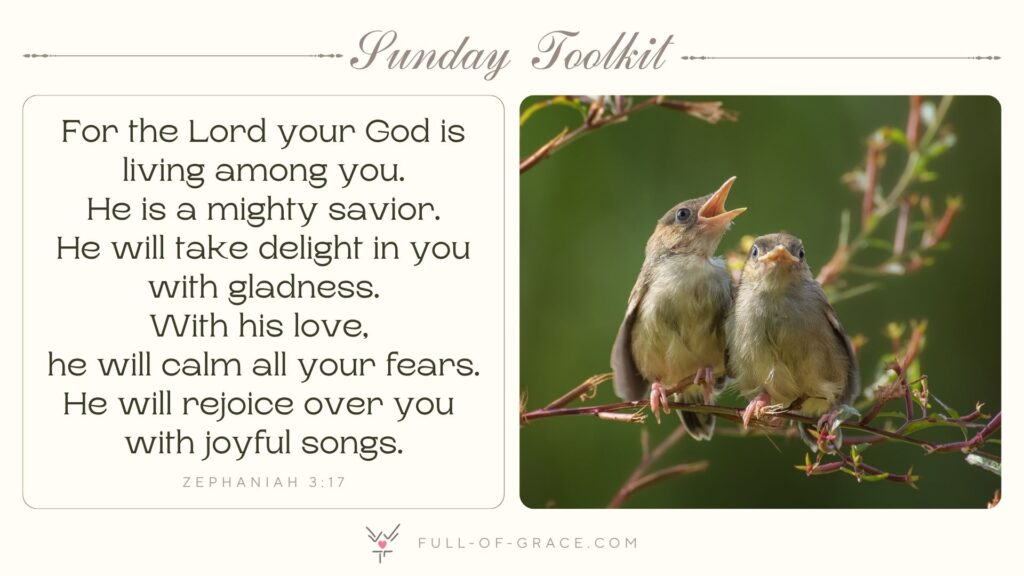
Zephaniah 3:17 completes the circle: the Lord your God is in your midst… he will rejoice over you with gladness, he will renew you in his love, he will exult over you with loud singing (ranan – the same piercing cry). God answers back in the same register. The covenant, in this image, is a duet. The call to sing is the call to take up our part.
This Sunday’s movement – from lips (the previous Sunday‘s theme of response-ability) deeper into heart – is a movement from the organ of expression to the organ of motivation. Not what you say but from where you say it. Not the sound you make but what makes you sound.
Second Reading – 1 Peter 2:4–9
Historical Placing
1 Peter is addressed to communities scattered across the provinces of Asia Minor – Pontus, Galatia, Cappadocia, Asia, Bithynia – described as parepidēmoi, resident aliens or temporary sojourners. These are likely mixed communities of Jewish and gentile Christians, living without civic belonging, marginal to the dominant culture. The letter is probably written from Rome (cryptically called Babylon in 5:13) in the late first century, possibly pseudonymous in the Petrine tradition, possibly a baptismal homily given liturgical shape.
The passage falls within a section that many scholars identify as post-baptismal catechesis – an address to those newly entered into the community, explaining what they have become.
What Is Happening
Peter gives the newly baptized a new identity through a cascade of stone and building images drawn from the Hebrew scriptures. Come to him, the living stone, rejected by human beings but chosen and precious in God’s sight. The verb is proserchomai – draw near, approach, come into proximity – the same language used for approaching God in the priestly tradition. Then: and like living stones, let yourselves be built into a spiritual house.
The stone typology layered here is extraordinary and deserves careful unpacking:
The rejected stone (Psalm 118:22): The stone the builders rejected has become the cornerstone. In its original Psalm context this likely referred to Israel – the nation scorned by imperial powers that became the hinge of salvation history. In Peter’s reading, it applies to Christ, and by extension, to every person the world discards.
The cornerstone (Isaiah 28:16): See, I am laying in Zion a precious cornerstone; whoever trusts in it will not be put to shame. The cornerstone in ancient construction was the dressed stone placed at the corner of a building where two walls meet – the stone that determines the alignment of everything else. Two realities meet in it and are held in relation to one another. The cornerstone does not float above the structure; it is buried in it, bearing weight, setting direction.
The living stone: This is Peter’s addition, rooting the entire image in resurrection. A living stone is a stone that has crossed from inert to resonant. It is not merely foundation; it is active, generative, communicating life to what is joined to it.
The stumbling stone (Isaiah 8:14): The same stone becomes a rock of offense for those who do not believe. Not because God intends harm, but because the stone that sets alignment will trip anyone who refuses to orient themselves by it. It is the same stone. The difference is in the approach.
Key Insight – The Royal Priesthood
The climax of the passage is the direct application of Exodus 19:6 to the baptized community: you are a chosen race, a royal priesthood, a holy nation, a people set apart. Israel’s Sinai vocation – the calling that the covenant community never quite managed to inhabit collectively – is now given to the whole baptized body. Not to clergy. Not to specialists. To the community itself.
The purpose of this priesthood is not sacrifice in the Temple sense. It is proclamation: to declare the wonderful deeds of him who called you out of darkness into his marvellous light. The Greek is aretai – excellences, virtues, the shining qualities of the One who called. The royal priesthood exists to make God’s character audible in the world. To sing his praises, as the Irish Missal renders it.
The passage thus completes the arc begun in Acts: the whole community, not its leaders, is the vessel of the sacred. The whole community, not its specialists, is the priesthood. And the priesthood’s primary act is resonance – making audible what has been received.
Cross-Reference
The image of light calling out of darkness connects directly to the Advent arc explored in the Second Sunday of Advent Year A – or (light) and or (skin), and the movement from garments of light to garments of skin. What was covered in the garden is being uncovered here.
Gospel – John 14:1–12
Historical Placing
We are in the upper room, on the night before the crucifixion. John’s Gospel places this extended farewell discourse (chapters 13–17) within the Last Supper. Jesus has already washed the disciples’ feet, predicted his betrayal, given the commandment of love, and told Peter he will deny him three times. The disciples are in interior upheaval – the Greek word is tarassō, a strong agitation, the same word used when Herod hears of the Messiah’s birth (Matthew 2:3) and when the disciples on the lake mistake Jesus for a ghost (Matthew 14:26). This is not mild anxiety. This is the heart thrown into chaos.
John’s Gospel is widely dated to the late first century, 90–100 CE, written for a community that has experienced the destruction of the Temple (70 CE) and the definitive break between synagogue and church. They are learning to live without the physical presence of Jesus, without the Temple, without many of the institutional anchors of their faith. The farewell discourse is pastoral address to exactly that situation.
What Is Happening
Do not let your hearts be troubled. This is not comfort before content. It is precondition for what follows. The troubled heart – the heart in tarassō – cannot receive what is about to be said. It is too full of its own disturbance. The instruction to untrouble the heart is, in effect, the instruction to create interior space.
Jesus then speaks of many dwelling places in the Father’s house. The Greek monai – from menō, to abide, to remain – are not guest rooms in a hotel of the afterlife. They are places of mutual remaining, spaces of active presence. The same root will appear in John 15 – abide in me, and I in you. The Father’s house is not a destination; it is a state of reciprocal indwelling. And Jesus is going to prepare a place – topos – space – within it for his own.
Thomas’s question – Lord, we do not know where you are going, how can we know the way? – and Jesus’s answer – I am the Way, the Truth, and the Life – is one of the most frequently quoted and most frequently misread lines in the Gospel. The emphasis in the Greek falls on hodos, the way, the road, the path itself. Jesus does not say I will show you the way, or I know the way. He says I am it. He is not the destination to which the route of our corrections lead. He is the route. To be on the way with him is already to be where one is going.
Philip’s request – Lord, show us the Father, and that will be enough for us – uses the verb arkeō: it suffices, it satisfies. Philip is asking to be filled, to arrive, to be done with the journey. And Jesus’s response is tender but clarifying: Have I been with you all this time and you still do not know me? To have seen Jesus is to have seen the Father. The destination has been present in the journey all along. Satisfaction in Philip’s sense – the fullness that stops the movement – is not what is on offer. What is on offer is a dynamic, mutual indwelling in which the searching and the finding are simultaneous.
Key Insight – The Greater Works
Verse 12 is among the most demanding statements in the New Testament: the one who believes in me will also do the works that I do and, in fact, will do greater works than these, because I am going to the Father. The Greek is meizona toutōn – greater than these. The statement is not metaphorical in the text.
The tradition has handled this variously. Chrysostom and Augustine read the greater works as the spread of the word – more people reached, more hearts transformed than Jesus in his earthly ministry could touch in three years in one region. This is not dishonest. But it is a retreat from the full force of the claim.
The works Jesus performs in John’s Gospel are signs – sēmeia – not primarily miracles in the sense of supernatural interventions, but embodied demonstrations of what the Kingdom of God looks like when it arrives in a human life. Sight restored, death reversed, water becoming wine at a wedding. These are not random demonstrations of power. They are the shape of a world put right.
The greater works are promised to the one who believes (ho pisteuōn eis eme – the one whose whole being is oriented toward me). This is not about technique or sacramental formula. It is about the quality of inner orientation – and the question of what has been emptied from the heart to make room for that orientation.
The Aramaic Undertow – Haymanutha
The Greek pisteuō (to believe, to have faith) translates an underlying Aramaic reality for Jesus himself. The Aramaic root is HMN – the same root as amen, as emunah (faithfulness, trustworthiness), as he’emin (to lean one’s full weight upon). When Jesus says whoever believes in me, he is not primarily describing an intellectual act. He is describing a posture: the full-body lean into what is trusted. The way a singer releases the breath entirely. The way a tree bends its whole weight into the wind without snapping. You cannot hold back and perform the works. The works require the total lean.

The Common Thread
Every reading this Sunday is asking the same question from a different angle: what are you filling your heart with, and does it have room for what is being offered?
Acts shows the early community learning to distribute rather than accumulate – the word spreads because no one is clutching it. The whole people carries what no individual can. The Psalm calls the loyal heart to ring out – but ringing requires interior space; stone does not vibrate. 1 Peter names the baptized community as a royal priesthood of living stones, joined to the Living Stone who was emptied and raised, called to make God’s character audible in the world. And the Gospel opens with a command that is also a precondition: do not let your hearts be troubled – which is to say, create the space. I am coming to dwell there.
The movement through the readings traces an arc from weight to resonance, from stone to song. The stone heart is not evil. It is simply full – full of settled meaning, conclusions already drawn, weight already accumulated. It cannot vibrate because there is no space inside it. The heart that can ring out – that can do the greater works, that can become a dwelling place – is the heart that has learned to hold its own meaning-making loosely enough that something larger can move through it.
This connects to the tzimtzum image in Kabbalistic thought: God creates not by adding to what is there, but by withdrawing, making room within himself for what is not yet himself. Creation is a gesture of holy emptying. The heart that mirrors that gesture – that creates interior space rather than filling every corner with its own conclusions – becomes capable of what Philip could not yet imagine: not satisfaction, but indwelling. Not arrival, but the Way.
Introduction to the Liturgy of the Word
Today’s readings trace a single movement: from the heart that is too full to the heart that can ring out. Acts shows us a community learning that the word spreads only when it is shared – that no individual, however close to Jesus, holds the whole gift alone. The Psalm calls the loyal heart to sing – not because music is decoration, but because resonance requires space, and the heart that has kept space for God is the heart that can vibrate back. And the Gospel meets us with a command disguised as comfort: do not let your hearts be troubled. Come, already, make room. I am the way – not the destination you arrive at, but the road beneath your feet, right now.
More Resources
The Heart That Learned to Ring Out – An overview of This Sunday theme and symbols.
From Music to Worship – A post-communion Taizé practice for This Sunday
Those Who Started With Bread – Seven intercessions aligning with This Sunday message.
Follow the Mystery of Senses
This week’s Echoes of Yourself and Born to Recognise are both tracing the theme of the blessing of one’s heart. Come back towards the end of the week for a story speaking into the art of emptying oneself – and a set of practices on how to translate it into your own world.
























One thought on “The Stone That Learned to Sing: Fifth Sunday of Easter, Year A: Background”
Comments are closed.